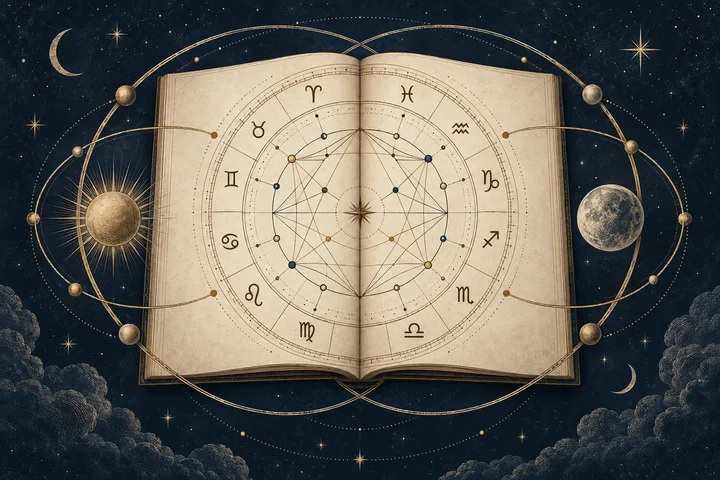
Begin with the question behind the wheel
A new reader usually sees a crowded circle first. Symbols. Lines. Strange names. Before you explain any of them, give the page a job. The fastest way to lose someone is to make every mark seem equally urgent.
Start with the human question. Are you trying to understand why conversation feels easy? Why one person feels soothed while the other feels pursued? Why affection and desire seem to move at different speeds? A synastry report becomes readable when the chart serves one of those questions instead of replacing it.
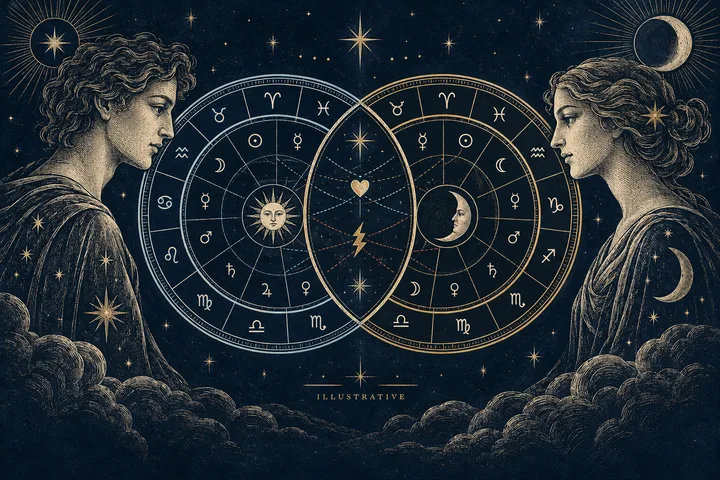
Tell your companion what you are comparing. Synastry places two natal charts side by side or overlays them so an astrologer can study the contacts between them. The chart shows an interaction between two symbolic languages. It does not turn either person into a label. Astro.com describes synastry as a comparison of two birth charts, while its partner-chart material distinguishes synastry from composite and Davison relationship charts. That distinction matters when you introduce the report. You are looking at the meeting of two charts, not a single chart that belongs to the relationship itself.
Say whose planet is whose. If your Moon touches their Venus, name it that way. The Moon person and the Venus person don't receive the contact in exactly the same manner. The Moon person brings emotional rhythm, comfort, and instinctive response. The Venus person brings attraction, taste, affection, and a way of showing value. Cafe Astrology makes this planet-person distinction directly in its synastry guidance, and it gives beginners a useful habit: keep both people in the sentence.
Then give the report's boundaries in one clean breath. This comparison uses the Moon, Venus, and Mars signs supplied by the two people, plus optional degrees. It can examine selected major aspects with a stated six-degree orb. It doesn't calculate natal positions from birth details, calculate houses, or produce a relationship score. If a birth time is missing, don't quietly add an Ascendant or house overlay. Keep the reading honest by keeping the input visible.
Imagine Maria and Leon opening a report together. Maria has supplied her Moon, Venus, and Mars signs. Leon has done the same. They don't begin with, "Are we meant to be?" They begin with, "Where do we feel at ease, and where do we miss each other?" That question gives the symbols somewhere to land. It also leaves room for the couple's experience to refine the reading.
The first explanation, then, is not a definition of every symbol. It is the purpose of the comparison. Tell the reader what the chart is showing, what information went into it, and what they can test in their own conversations. Once that frame is steady, the layers become much easier to follow.
Sources: Aspects Between Charts; Synastry and Relationship Astrology; Chart Types: Synastry Chart
Explain the three chart layers before naming a verdict
Use a simple three-part sentence. The planet is what is active. The sign is how it acts. The aspect is how it meets the other chart. Beginners can hold that structure. They don't need a tour of every astrological school before they understand the next line in the report.
The Moon speaks to instinctive feeling, comfort, and the way a person responds when life gets close and unguarded. In a comparison, Moon contacts can describe what feels familiar, what asks for care, and what happens when one person becomes tired or vulnerable. This is why the Moon belongs near the beginning of a shared reading. It brings the chart into ordinary moments such as needing reassurance, making a home, or asking for space.
Venus shows attraction, pleasure, affection, values, and the style of giving and receiving love. Venus isn't only about romance. It also shows what feels pleasant, worth protecting, and beautiful enough to choose again. When you explain a Venus contact, ask about tastes and values as well as chemistry. Does one person feel appreciated? Do they enjoy the same pace of closeness? Can they make room for different ideas of generosity?
Mars brings desire, initiative, heat, anger, pursuit, and the way a person moves toward a goal. Mars can describe sexual energy, but it also appears in decisions, arguments, boundaries, and who acts first. A strong Mars contact may energize a bond. It may also make small disagreements arrive with a louder voice. Don't call it proof of lasting love. It describes force and response.
The sign gives each planet its manner. A Moon in an earth sign may seek steadiness through practical care. A Venus in an air sign may value conversation and mental freedom. Mars in a fire sign may act quickly and directly. These are interpretive starting points, not complete portraits. A sign match can show shared language, but it doesn't replace the aspect between the degrees.
You can make the distinction visible with a small translation. A sign-based statement says, "Both people may value steadiness." An aspect-based statement says, "These two placements meet at a particular angle, so steadiness and affection may support or disturb each other in a specific way." The first is broad. The second has a shape you can check. A beginner doesn't need less astrology. They need the pieces in the order that lets each piece carry its proper weight.
The same rule keeps the reading from becoming a personality test. A Venus sign isn't a full account of how someone loves. A Moon sign doesn't explain every reaction. Mars doesn't excuse harsh behavior. Read the placement as a function in a chart, then read the contact as an exchange between functions. That language respects the chart and the person at the same time.
The aspect gives the relationship between the two jobs. A conjunction joins the planets and can feel immediate or familiar. An opposition creates polarity, attraction, and a see-saw between two needs. A trine or sextile often makes cooperation easier. A square presses the two energies against each other, which can create irritation, effort, and useful movement. The aspect doesn't tell you whether the contact is good or bad in isolation. It tells you what kind of work the connection asks for.
Astrodienst's synastry material describes harmonious aspects as easier to blend and difficult aspects as points of friction that can demand energy. Cafe Astrology gives the same useful tension to its aspect descriptions: a square can frustrate, but it can also create excitement and growth; a flowing aspect can support, but it need not create attraction by itself. Explain both sides. Beginners deserve a reading with texture, not a row of lucky and unlucky stickers.
Try this spoken version: "Your Moon shows how you settle. Their Venus shows how they express affection. The aspect tells us whether those two movements blend, pull against each other, or meet with intensity." That is enough for a first pass. Now the reader knows what each word does, and the chart has stopped looking like a code.
Sources: Synastry and Relationship Astrology; What's Your Sign? An Intro to Synastry Charts and Astrological Compatibility
Read the Moon first when the question is emotional safety
If the couple wants to understand closeness, begin with the Moon. Not because the Moon outranks every other planet in every reading, but because people notice emotional fit before they can explain it. They know whether a room feels easy. They know when a reply lands badly. The Moon gives you language for those first reactions.
Look at each Moon sign on its own before you compare them. Ask what calms each person, what makes them retreat, and what kind of care they recognize. A Moon that needs quiet may not read silence as rejection. A Moon that needs spoken reassurance may. Neither response is automatically wiser. They are different routes to safety.
Then look for Moon contacts to the other person's Moon, Venus, and Mars. Moon-Moon contacts compare two emotional rhythms. Moon-Venus can connect feeling with affection and make care easier to recognize. Moon-Mars can bring strong body-level response, but it can also make one person's action feel invasive to the other's sensitivity. The planet pair tells you what is meeting. The aspect tells you how.
Consider an example. Maria's Moon is in a sign that prefers steady, tangible reassurance. Leon's Venus is in a sign that shows affection through words, invitations, and playful attention. Their signs don't need to match for the contact to be useful. The first question is practical: does Maria experience Leon's words as warmth, or does she need him to follow them with dependable action? The chart suggests a topic. Their answer gives the reading its meaning.
If the contact is close by degree, explain that closeness before you make the interpretation more dramatic. A tight Moon-Venus aspect may be felt often because the two planets meet with little distance. A wider contact may still belong in the picture, especially when the signs support it, but it shouldn't lead the reading over a closer and more relevant contact. This is where a report's degree column protects the beginner from treating every line as equal.
Keep the role language balanced. The Moon person isn't simply the needy one, and the Venus person isn't automatically the giver. A person can express both roles through different contacts. One partner may feel more exposed in the Moon role while also taking the Venus role in another contact. Name the dynamic, then ask how it travels in both directions.
The strongest exception is a Moon contact that looks soft but doesn't match the couple's lived rhythm. Maybe the Moon person feels watched instead of cared for. Maybe affection arrives when they need solitude. Don't force the symbol to win. Let the mismatch sharpen the question: what does care look like to each person, and have they said it plainly? A chart can reveal a pattern worth discussing. It can't conduct the discussion for you.
End the Moon layer with one question: "When you are tired, what helps you feel close, and does your partner know that?" If the answer is clear, move to Venus. If it isn't, stay here. The first job of the report is understanding, not speed.
Sources: Aspects Between Charts; Synastry and Relationship Astrology
Use Venus to explain affection, values, and attraction
After emotional response comes preference. Venus shows what each person enjoys, values, and tends to call loving. This is the layer that answers questions such as, "Why does their way of showing interest work on me?" It also answers a quieter question: "What do I need to feel chosen?"
Read each Venus sign without turning it into a love-language stereotype. Venus in a fixed sign may want loyalty and continuity. Venus in a mutable sign may want room to adapt and explore. Venus in a cardinal sign may enjoy initiative and a relationship that keeps moving. These are tendencies within a chart, not rules that erase the rest of the person.
Then compare Venus with Moon and Mars across the two charts. Venus-Moon can help affection feel safe and familiar. Venus-Mars can create attraction, pursuit, and a lively exchange between desire and response. Venus-Venus can show shared taste or different ways of giving value. A Venus-Saturn contact, if it appears in a fuller comparison, may bring commitment and responsibility, but it can also make affection feel measured. Keep the report's actual scope in view. A placement-only comparison shouldn't pretend to calculate a contact it hasn't been given.
Astrology.com presents Venus as a sign of love, values, and the way affection is expressed, and it treats Moon-Venus and Venus-Mars contacts as distinct layers. Cafe Astrology similarly separates Venus from Mars: Venus describes romantic attraction and pleasure, while Mars carries desire, assertion, and sexual expression. Those sources support a helpful beginner rule. Don't use "chemistry" as a catch-all word. Say whether you mean tenderness, taste, admiration, pursuit, or heat.
Imagine Maria values quiet loyalty, shared meals, and a sense that plans will hold. Leon shows love by making spontaneous invitations and finding new things for them to try. Their Venus signs may create delight or friction. The chart doesn't settle which one is more loving. The couple can ask, "Which gestures make you feel remembered, and which ones feel like pressure?" That question turns a symbolic difference into a usable choice.
This is also where you explain that attraction and compatibility aren't identical. A contact can make someone compelling without making every daily exchange easy. A soft Venus aspect can support kindness without creating urgency. A hard Venus aspect can expose different values, yet give the couple a clear place to negotiate. Rank the contact by relevance to the question. If the reader asks about affection, Venus leads. If they ask about conflict, Mars or Saturn may deserve the next seat.
Watch for one common mistake: treating the Venus person as the only person who feels attraction. Contacts work between two charts. One person may feel admired, the other may feel desired, and both may be changed by the exchange. Use mutual language unless the report gives a clear reason to distinguish roles.
Ask for an example from the couple's week. Who plans the date? Who chooses the restaurant? Who notices when the other needs a softer tone? A Venus interpretation becomes more accurate when it touches a real choice. Then move to Mars, where preference becomes action.
Start with the boundary, then name the question: how do these supplied chart placements meet? Tell the new reader whose chart is whose, which placements and degrees you used, and what the report doesn't calculate. Explain one planet pair in plain language before showing the aspect table or chart wheel. A useful order is Moon for emotional response, Venus for affection and values, Mars for desire and conflict, then aspects for the strength and style of each contact. Signs describe how a planet acts. Aspects describe how two planets connect. The orb tells you how close the connection is by degree. Keep the first conversation small. Choose one clear contact, ask whether it matches a lived pattern, and let the person disagree. A synastry reading works best as shared language for attraction, comfort, friction, and repair. It can't decide what either person should do. If you have known Moon, Venus, or Mars signs and optional degrees, compare those placements in the Synastry Comparison Report and use the result as a focused conversation guide.
Sources: Synastry and Relationship Astrology; What's Your Sign? An Intro to Synastry Charts and Astrological Compatibility
Bring in Mars only after the reader understands desire and friction
Mars is vivid. That is why it can hijack a beginner's reading. A Venus-Mars line may feel thrilling, and a Mars square may look alarming, but neither should arrive before the reader understands what each person wants and values. Mars describes how energy moves. It doesn't decide whether the relationship deserves a future.
Explain Mars in ordinary verbs. Pursue. Initiate. Protect. Compete. Desire. Argue. Stop. A Mars sign can show the style of action. One person may move quickly and speak plainly. Another may wait, test the ground, or act through persistence. When two Mars placements meet, the question isn't simply whether they get along. It is whether they can share momentum without turning every difference into a contest.
Mars contacts to Venus often draw attention because attraction has a physical charge. The Venus person may feel appreciated or pursued. The Mars person may feel invited to act. The same contact can become awkward when one person wants tenderness and the other pushes for resolution. Name both the pull and the pressure.
Mars-Moon contacts deserve careful words. They can make emotional and physical responses arrive quickly. They can also make one person's directness hit the other's sensitive places. Mars-Mars contacts can energize shared projects or create a pattern of escalation. A square isn't a sentence of conflict, and a trine isn't a promise that nobody will argue. The aspect shows the route the energy takes; the people decide how they drive it.
Consider an example. Maria's Mars wants a clear plan before it acts. Leon's Mars starts moving and solves problems on the way. In a shared task, Leon may experience Maria as slow. Maria may experience Leon as careless. The useful reading isn't "bad Mars compatibility." It is, "When action matters, who sets the first step, and what information does the other person need before joining?" That answer can change a Saturday, a disagreement, or a major decision.
Cafe Astrology notes that difficult Mars contacts can bring arguments as well as stimulation, and that Mars doesn't by itself show a need to stay together forever. That is a valuable boundary to state in a warm, direct way. Mars can tell you where heat lives. It cannot tell you what to do with the heat.
When you share this layer, avoid gendered shortcuts. Traditional texts may describe Venus and Mars through feminine and masculine symbolism, but real people can carry, express, and receive both planetary functions. Say affection, desire, pursuit, receptivity, anger, and action. The language stays accurate and leaves room for the whole chart.
Finish with a behavioral question: "When one of you wants action and the other wants time, what agreement keeps the moment from becoming a fight?" If the couple can answer that, Mars has done its work.
Sources: Synastry and Relationship Astrology; What's Your Sign? An Intro to Synastry Charts and Astrological Compatibility
Show how aspects and orbs rank the story
Once the reader knows the planets, teach them how to rank the contacts. This is where a report either becomes useful or turns into noise. Ten lines can look like ten equal truths. They aren't. A close major aspect between relevant personal planets usually deserves more attention than a wide, minor, or weakly related contact.
An aspect is an angular relationship between two chart points. In a beginner's report, start with conjunction, opposition, trine, square, and sextile. The conjunction brings the energies together. The opposition sets them across an axis. The trine and sextile support flow, with the sextile often asking for a choice or opening to be used. The square creates friction that may demand adjustment. None of these words means simple good or bad.
The orb is the distance between the exact aspect and the actual degrees of the two planets. A smaller orb means a closer contact. If two supplied placements are six degrees apart from the exact angle, a six-degree editorial orb can include them. If the degrees are unknown, don't invent a precision that the input doesn't contain. A sign-only comparison can discuss affinity and tension by sign, but it can't honestly call an aspect exact.
Different astrologers and chart services use different orb rules. Astrology.com says aspects in its introductory synastry piece are preferably six degrees or less. Astro.com explains that its drawn synastry aspects use half the natal-chart orb, partly because two charts create many more possible contacts. Your report uses a stated six-degree orb for selected major aspects. Tell the reader that rule before showing the table. A clear rule makes the interpretation reproducible.
Use a three-question ranking test. First, are the planets central to the question? Moon, Venus, and Mars usually matter for emotional, affectionate, and physical themes. Second, is the aspect major and close by degree? Third, does the sign relationship change the way the aspect acts? A close square between fixed signs may hold tension through stubbornness. A mutable-sign square may scatter into repeated adjustments. The aspect leads, but the signs give it a voice.
A fourth question helps when the table is crowded: does this contact change the interpretation of a stronger one? If it does, keep it. If it merely repeats the same sentence in new clothing, move it lower or leave it out of the first conversation. This is editorial judgment, but it follows an astrological truth about emphasis. A report should show a pattern, not make the reader count symbols to discover one.
You can also sort contacts by the question's time scale. Moon contacts often become visible in recurring moments of care and withdrawal. Venus contacts may appear in the habits of affection, pleasure, and choice. Mars contacts may surface when the couple has to act, decide, pursue, or stop. This doesn't mean one planet is always stronger. It means the reader can look in the right part of life for the contact's expression.
Imagine Maria and Leon have a sign-based Moon-Venus harmony, plus a close Moon-Mars square. The first tells them that care and affection may recognize each other. The second may describe why one person's urgency can upset the other's emotional rhythm. Don't add the two contacts into a score. Put them in order. The close Moon-Mars square deserves the practical question, while the Moon-Venus connection shows what can help repair the moment.
This is the strongest exception to a simple closeness rule: a wider contact can matter when it repeats a pattern already visible through a closer contact, a shared sign emphasis, or the couple's lived experience. But repetition should refine the reading, not rescue a weak claim. If a wide aspect is the only evidence for a dramatic conclusion, let it remain secondary.
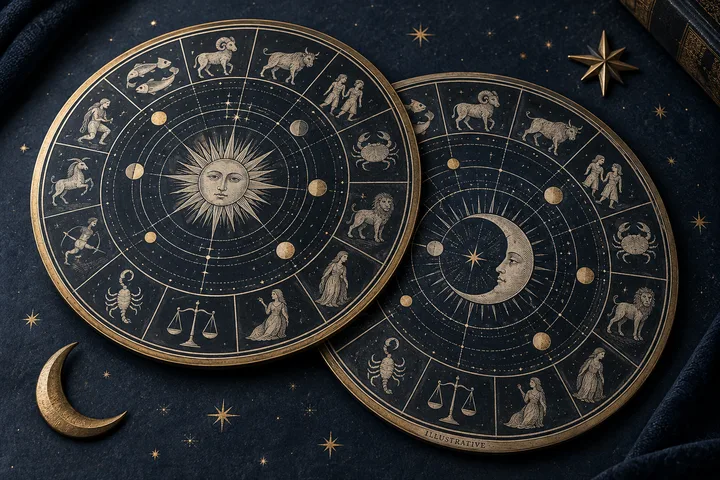
When you share the table, read one line at a time. Name the planets. Name the aspect. Give the orb. Translate it into one sentence. Ask for a real example. Then pause. The pause is part of the method. It gives the other person room to recognize the pattern, reject it, or add something the table can't show.
Sources: Aspects Between Charts; Synastry and Relationship Astrology; What's Your Sign? An Intro to Synastry Charts and Astrological Compatibility
Translate the report into a conversation, not a performance
A report is useful when both people can speak inside it. If one person reads while the other waits for a verdict, astrology becomes a performance. The beginner hears a stream of conclusions and starts defending or fearing them. Slow the process down. Give each contact a question, an example, and a choice.
Use the same order every time. Identify the contact. Explain the planet roles. Describe the aspect. Mention the orb if degrees are supplied. Offer a supported expression and its strongest exception. Ask what the person notices. This is a small structure, but it keeps the reading from drifting into a pile of impressions.
For a Moon contact, ask what happens under stress. For Venus, ask what makes affection feel real. For Mars, ask how the couple handles timing, pursuit, anger, and repair. The questions keep the reading close to life. They also prevent a familiar astrological phrase from pretending to be a complete answer.
Let each person answer for themselves. Don't tell your partner what their planet means before they have spoken. The person with the Moon contact may experience the exchange differently from the person with the Venus or Mars contact. Cafe Astrology's planet-person guidance supports this two-sided reading. It is more precise than saying, "This aspect means you both feel the same thing."
A good shared reading also has a right to stop. If a contact opens a tender subject, you don't need to extract a confession from it. You can write down the question and return later. If one person doesn't enjoy symbolic language, translate the point into a behavior and leave the symbol there. "You may have different ways of asking for space" is a complete useful sentence, even if the other person never learns the word opposition.
Keep the reader's consent in the room. Sharing a report about someone who hasn't agreed to discuss their chart can expose private material and change the tone of the relationship. When both people are present, invite correction. When only one person is reading, describe the other chart carefully and avoid claiming access to that person's inner life. A chart comparison can be intimate without becoming surveillance.
If you write notes, separate observation from interpretation. Record the supplied placements and degrees first. Then write the astrological meaning. Finally, add the example the couple recognized. This three-line habit makes it easier to see whether a conclusion came from the chart, from a broad sign phrase, or from a real event. It also gives the couple a clean way to revisit the reading later.
Imagine Maria reads, "Leon activates your Moon." That sentence sounds personal, but it is too broad to help. She can ask, "When do I feel most emotionally seen by Leon? When do I feel crowded?" Leon can ask, "What do I do in those moments that helps, and what do I do that makes it harder?" The chart has now become a map for a conversation about behavior and need.
Keep difficult contacts free of blame. A square is not a bad person. A Saturn contact is not a jailer. Mars is not a promise of aggression. The language should name tension without assigning a moral role. Try, "This contact may make your timing collide, so notice who feels rushed and who feels blocked." Then ask what agreement would protect both people.
Also keep beautiful contacts free of pressure. A Moon-Venus connection can feel tender. A Venus-Mars contact can feel magnetic. Neither creates a duty to continue, disclose, commit, or forgive. The chart can honor the bond without turning it into a command. That is especially important when one person is more invested in astrology than the other.
If the new reader wants more detail, give it in layers. Explain the strongest contact first. Add the second only when it changes the interpretation. Leave minor contacts for later. A report should feel more intelligible after ten minutes, not more mysterious.
Sources: Aspects Between Charts; Synastry and Relationship Astrology; Chart Types: Synastry Chart
End with what the two of you can do next
The final explanation should return to the opening question. If the couple asked why closeness feels easy in one moment and difficult in another, name the chart pattern and the practical response. Don't end with a pile of keywords. End with one thing to notice and one thing to try.
Suppose the reading shows an easy Venus contact and a tense Mars contact. The ranked interpretation is clear. Affection may be easier to recognize than timing and conflict. The couple can protect the affection by making a rule for heated moments: pause before pressing for an answer, say what action is needed, and agree when the conversation will resume. That is not a prediction. It is a choice guided by the pattern.
Suppose the Moon layer is the strongest one. The next action might be a care inventory. Each person names what helps them settle, what makes them feel dismissed, and what kind of repair works after a rupture. If Venus leads, compare the gestures that feel generous with the gestures that feel costly. If Mars leads, decide how you want to handle pursuit, space, and disagreement before the next argument arrives.
Do not let missing data turn into invented detail. With supplied signs and optional degrees, you can compare Moon, Venus, and Mars placements and selected major aspects within the report's six-degree method. You cannot responsibly add houses, angles, or exact Moon timing when those inputs are absent. A narrower reading can be a stronger reading because every sentence has a visible reason to be there.
If the chart wheel still overwhelms the beginner, return to the table. If the table feels cold, return to the lived example. If the interpretation feels too broad, narrow the question. The next useful question may be, "Which contact describes the issue we keep meeting this month?" It may be, "What do we need to verify before we take this interpretation seriously?" Both are better than asking the report to decide the relationship.
This is where a focused Synastry Comparison Report can help. Supply the Moon, Venus, and Mars signs for both people, and add degrees when you have them. The report can organize the comparison, identify selected major contacts within the stated orb, and keep the missing-data limits visible. Use it as a shared reference while you talk. The informational answer comes first. The chart supports the conversation; it doesn't replace it.
Return to Maria and Leon. They began with a crowded wheel and a large question. They ended with a smaller one: when Leon moves quickly and Maria needs steadiness, what will they do before either person feels misunderstood? That is a better gift from synastry than a dramatic label. It gives the couple a pattern, a choice, and a way to meet again.
So explain the report in this order. Frame the question. Name the inputs. Teach planet, sign, aspect, and orb. Read Moon, Venus, and Mars in relation to the question. Rank the closest relevant contacts. Ask for lived examples. End with one practical agreement. Then stop. Let the two people continue the reading in their own lives.
Sources: Aspects Between Charts; Synastry and Relationship Astrology; What's Your Sign? An Intro to Synastry Charts and Astrological Compatibility
A little more clarity
Should I explain the chart wheel or the aspect table first?
Start with the aspect table if the reader is new. It names the two planets, the aspect, and often the orb in a direct line. Explain one contact, then use the wheel to show where that contact sits. The wheel adds shape and context, but it shouldn't make the beginner hunt for the meaning you already know.
What if we only know our Moon, Venus, and Mars signs?
Begin with sign meanings and sign relationships, then state that degree-based aspects remain unconfirmed. You can compare emotional, affectionate, and desire styles from supplied placements, but you shouldn't call a contact exact or add houses and angles. Add degrees when you have reliable values, and keep the zodiac reference frame consistent.
How should I explain a difficult aspect without frightening someone?
Describe the friction as a pattern of interaction, not a character judgment. A square may show where timing, needs, or expression require effort. Give its useful expression and its strongest exception, then ask for a real example. Finish with a choice the couple can make, such as pausing before escalation or naming a need directly.
Can a synastry report tell us whether we should stay together?
No. Synastry can give language to attraction, comfort, desire, tension, and responsibility, but it doesn't issue a dating verdict or certify a destined bond. Use the reading to notice patterns and choose a conversation. What each person does with that understanding remains the important part.
Sources & further reading
- Aspects Between Charts
Supports the two-sided planet-person interpretation and the need to read sign and house context with interchart aspects.
- Synastry and Relationship Astrology
Supports the distinct roles of Venus and Mars and the interpretive differences among conjunctions, oppositions, flowing aspects, and squares.
- What's Your Sign? An Intro to Synastry Charts and Astrological Compatibility
Supports the beginner definitions of Moon, Venus, Mars, degrees, and a preference for close aspects in synastry reading.
- Chart Types: Synastry Chart
Supports explaining the synastry bi-wheel and the separate chart-position and aspect-table views to a beginner.
Synastry Comparison Report
Enter known placements for two people. Get an input-by-input comparison, selected aspect calculations and a clear record of what remains uncertain.
Compare our placements