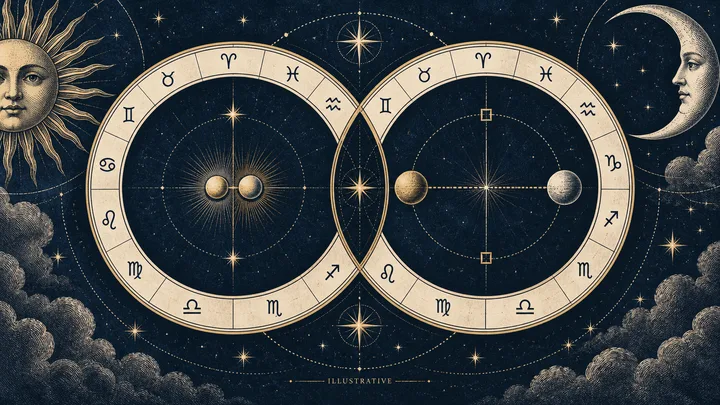
A tight supportive aspect is usually the clearest expression of ease, but it isn't automatically the most important contact in the comparison. Read the aspect first, then its orb, then the planets involved. A one-degree Moon-Venus trine may show an easy route to comfort, while a five-degree Mars-Saturn square may describe the timing problem the couple must actually solve. Rank each contact against the question in front of you. Keep a six-degree working orb for this report, use exact degrees when they're supplied, and translate the leading contact into one observable conversation or agreement. That's a more useful reading than adding every aspect into a score.
What tight and wide actually tell you
A tight aspect is concentrated. A wide aspect is less exact. That is the first distinction, not the final ranking. An aspect describes the angle between two planets: sextile at 60 degrees, square at 90, trine at 120 and opposition at 180. The orb measures how far the actual positions sit from that exact angle. Skyscript's glossary also shows why astrologers don't all use one universal orb system. This article keeps a six-degree working orb for selected major aspects.
The angle describes the meeting. The orb describes its precision. The planets describe the subject. If Venus is 14 degrees Taurus and the Moon is 15 degrees Virgo, their one-degree trine is close. If Mars is 2 degrees Leo and Saturn is 7 degrees Taurus, their five-degree square is wider. Both examples can belong in the same comparison, but they shouldn't be treated as identical evidence. Check degrees before you call a contact tight or wide. Applying and separating are a different question. The orb tells you whether the contact is within range; applying or separating requires the planets' motion toward or away from exactness, including each planet's speed and retrograde status. A static pair of natal degrees can't prove that status, and a retrograde turn can change an aspect that appears to be applying. Sign-only placements can't establish any of that.
Sources: The Meaning of the Aspects in Astrology - Cafe Astrology; Orbs (or rays) - Skyscript Glossary; An Introduction to Aspects and Chart Shaping in Natal Astrology; Application - Skyscript Glossary
Why a close trine or sextile deserves attention
A close trine usually shows an easy exchange that runs almost by itself. A Moon-Venus trine can make comfort feel natural. One person responds to a feeling, and the other recognizes the response as care. Because the exchange is so familiar, the pair may overlook it. They enjoy the gift without learning its shape.
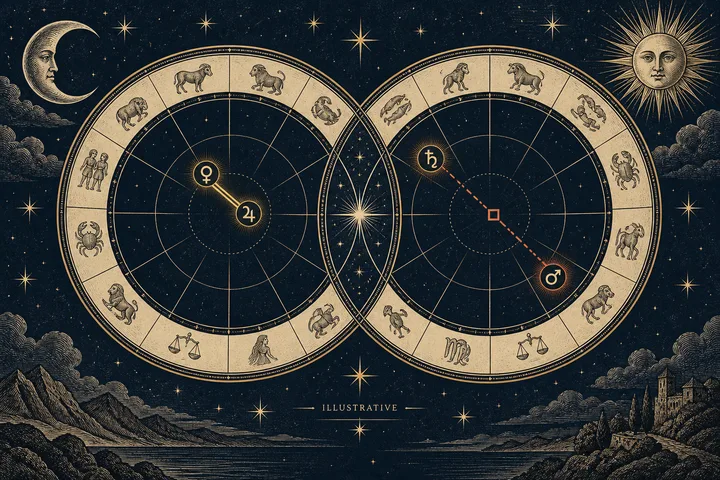
A sextile is also supportive, but it asks for participation. Venus sextile Mars can open a warm, playful route between attraction and initiative. Someone still has to reach for it. That difference matters in a report. Describe a trine as an instinctive ease and a sextile as an available skill, then name the behavior that gives either one a life. A quiet check-in, a touch after a hard day or a direct invitation says more than the word harmonious. Cafe Astrology makes the same broad distinction between trines that flow naturally and sextiles that become useful through conscious direction.
Sources: The Meaning of the Aspects in Astrology - Cafe Astrology; An Introduction to Aspects and Chart Shaping in Natal Astrology; Synastry: Love and Relationship Astrology - Cafe Astrology
What a wider square or opposition brings
A wider challenging aspect can still describe the subject that keeps asking for a response. A square puts two planetary functions at cross-purposes. Mars square Saturn, for example, can describe action meeting delay, caution or duty. An opposition places two poles across from each other. Moon opposition Mars may bring comfort and direct action into the same exchange, with each person feeling that the other is pushing too far.
Don't turn that tension into a character judgment. The aspect shows a negotiation. It doesn't tell you who is cold, reckless or at fault. Start with a narrower claim: this contact may describe friction around timing, limits or emotional response. Then look for a real pattern. If the pair keeps meeting the same question, the wider contact has earned attention. If the pattern never appears, leave the symbolism in the background instead of forcing it into every disagreement.
Sources: The Meaning of the Aspects in Astrology - Cafe Astrology; An Introduction to Aspects and Chart Shaping in Natal Astrology; Synastry: Love and Relationship Astrology - Cafe Astrology
Let the planets decide what matters
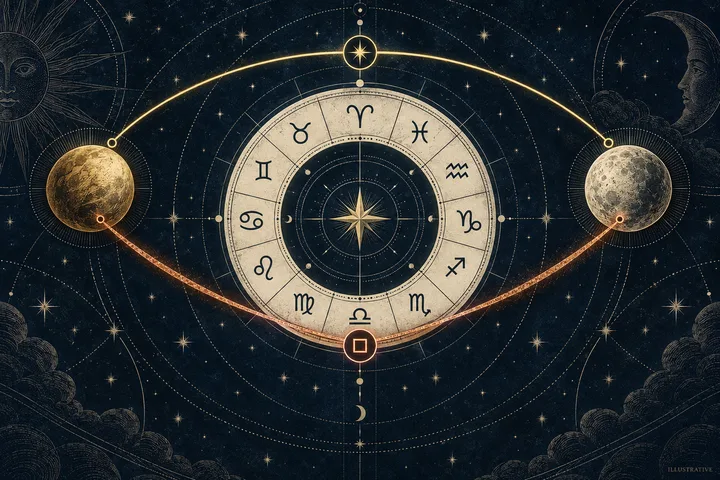
Orb alone can't tell you how important a contact is. Compare a one-degree Mercury-Jupiter sextile with a five-degree Moon-Saturn square. The first may bring generous conversation and shared ideas. The second may reach emotional safety, belonging and timing. If the couple is choosing a home or repairing distance, the Moon-Saturn contact may matter more to that decision even though it is wider.
For a placement-based report, the Moon, Venus and Mars give a useful first map. The Moon speaks to emotional response and comfort. Venus speaks to affection, pleasure and values. Mars speaks to desire, initiative and conflict. Saturn can add duty and limits. The outer planets can deepen themes of trust, power, ideals or boundaries. Keep each planet in its own lane. A Venus contact shouldn't answer a question that belongs to the Moon, and a Mars contact shouldn't be asked to explain every feeling.
Then look for repetition. Several contacts involving Saturn can make timing and responsibility a larger theme. Several contacts linking Venus and Mars can make attraction and pursuit central. Repetition raises a question; it doesn't give permission to invent an aspect pattern. Count the theme once, then show which actual contacts develop it.
Sources: The Meaning of the Aspects in Astrology - Cafe Astrology; An Introduction to Aspects and Chart Shaping in Natal Astrology; The Classical Origin and Traditional Use of Aspects
Worked example: care is easy, timing is not
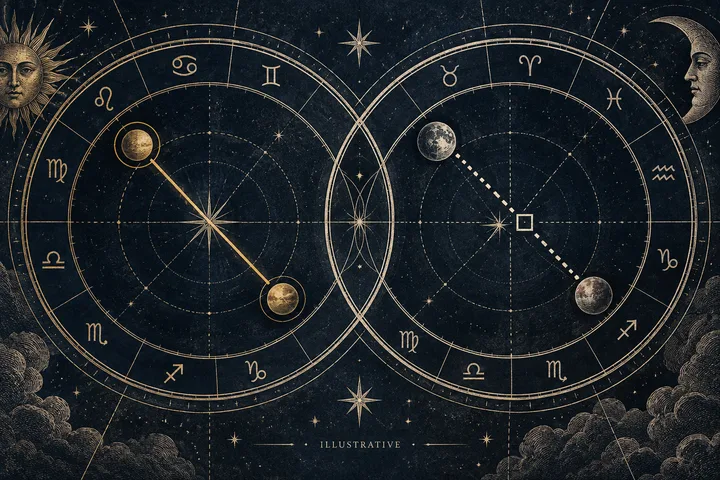
Imagine Maria has the Moon at 14 degrees Taurus and Daniel has Venus at 15 degrees Virgo. Their one-degree Moon-Venus trine is illustrative, not a calculated personal chart. Now imagine Maria's Mars at 2 degrees Leo and Daniel's Saturn at 7 degrees Taurus. Their five-degree Mars-Saturn square is also illustrative. The first contact is tighter. The second may still carry the decision.
The Moon-Venus trine suggests an easy route to tenderness. A meal, a familiar joke or a hand on the shoulder may restore closeness without much explanation. The Mars-Saturn square suggests a different exchange. Maria wants to act now. Daniel wants to check cost, timing or risk. On a weekend trip, she may hear delay as rejection while he hears urgency as pressure.
The right reading doesn't choose one winner. It gives them different jobs. The trine names the ease they can draw on before a difficult talk. The square names the practical question they need to negotiate: when should they leave, what can they spend and who bends this time? The symbolic reading becomes useful when it produces that concrete distinction.
The strongest exception to the tightness rule
A wider challenging aspect deserves heavier weight when three things converge: its planets fit the question, another contact repeats the theme and the couple recognizes the pattern in ordinary life. A close Venus-Mars trine may show strong attraction, while a wider Venus-Pluto opposition raises questions about privacy, control or fear of loss. If the couple is asking about boundaries, the opposition leads that conversation. The trine remains real, but it answers a different question.
The exception has a firm edge. A contact outside this report's six-degree working orb shouldn't become a strong degree-based claim just because its story sounds dramatic. Traditional astrologers and modern astrologers use different orb practices, and some give the luminaries more room. State the method. If degrees are missing, read the sign relationship as a broad possibility and don't claim a verified tight or wide aspect. Precision protects the reading's meaning.
Sources: Orbs (or rays) - Skyscript Glossary; An Introduction to Aspects and Chart Shaping in Natal Astrology; The Classical Origin and Traditional Use of Aspects; Synastry: Love and Relationship Astrology - Cafe Astrology
Turn the comparison into a conversation
Write the interpretation in three lines. First: what comes naturally between us? Second: where does a recurring difference ask for a choice? Third: what small practice could help this week? For the example above, the answer might be: we know how to comfort each other; our different speeds make plans tense; let's agree on a budget and a decision time before we discuss the next trip.
Name both sides of the contact. The Mars person may feel blocked, while the Saturn person feels responsible. The Moon person may seek reassurance, while the Venus person believes a kind gesture already said enough. Synastry becomes clearer when it describes the exchange instead of appointing a villain. A difficult aspect can ask for a boundary, a timing rule or a plain request. A supportive aspect can show which tone makes that request easier to hear.
If you have only signs, bring the exact Moon, Venus and Mars degrees before comparing tightness. If you have degrees, keep one orb method across the report and record the angle beside each orb. The Synastry Comparison Report works from supplied placements and optional degrees, using selected major aspects under a stated six-degree orb. It doesn't calculate natal positions from birth details or houses. Start the next conversation with one recent moment, name the pattern without blame, and ask what fair agreement would change the next one.
Sources: The Meaning of the Aspects in Astrology - Cafe Astrology; Orbs (or rays) - Skyscript Glossary; Synastry: Love and Relationship Astrology - Cafe Astrology
A little more clarity
Is a tight trine always stronger than a wide square in synastry?
It is usually more concentrated, but concentration and importance are different. A wider square can lead when its planets match the couple's question, repeat a larger theme or describe the decision in front of them. Read the trine as a possible resource and the square as a possible negotiation, then test both against a real exchange.
Can a synastry aspect matter when the degrees are missing?
You can still read the sign relationship and the broad planetary symbolism, but you can't verify the exact angle or orb. Don't call a contact one degree or five degrees wide without both positions. Supply the Moon, Venus and Mars degrees when you want a tighter comparison, and keep the report's six-degree method consistent.
Sources & further reading
- The Meaning of the Aspects in Astrology - Cafe Astrology
Defines the major aspect meanings and distinguishes natural trine flow from the conscious use of a sextile.
- Orbs (or rays) - Skyscript Glossary
Defines an orb as distance from exactness and explains why modern and traditional orb methods differ.
- An Introduction to Aspects and Chart Shaping in Natal Astrology
Lists major aspect angles and explains the contrasting functions of harmonious and tense aspects.
- The Classical Origin and Traditional Use of Aspects
Supports the traditional distinction between sign-based contact, degree exactness and applying or separating motion.
- Synastry: Love and Relationship Astrology - Cafe Astrology
Provides relationship-chart context for supportive and tense interaspects and the work each can require.
- Application - Skyscript Glossary
Explains that applying status depends on planetary motion toward exactness, including retrograde changes, not degrees alone.
Synastry Comparison Report
Enter known placements for two people. Get an input-by-input comparison, selected aspect calculations and a clear record of what remains uncertain.
Compare our placements