The real question is not who loves more
You agree that the relationship matters. You may even agree on the future you want. And still, the same argument keeps returning. One person says, “I’m carrying this relationship.” The other says, “I’m doing plenty. You just don’t see it.”
That argument usually hides a more precise disagreement. You’re not measuring love with the same ruler. One partner may count planning, follow-through, and practical help as devotion. The other may count emotional availability, physical closeness, or the willingness to drop everything when a crisis appears. Both may be sincere. Both may be frustrated. Love is present, but its visible form keeps changing at the point where the other person needs to recognize it.
Synastry helps by comparing two natal charts and looking at the contacts between them. In the astrological tradition, the planets describe functions, the signs describe the style of those functions, and the aspects describe how the functions meet. A chart comparison can show why one person’s way of loving lands as effort to them but as pressure to their partner. It can also show why a partner’s quiet, steady contribution feels invisible to the person waiting for a clear gesture.
That distinction matters. A chart can describe preference and rhythm, but it can’t decide capacity, willingness, or follow-through for either person. Those are four different questions, and they need four different answers. The reading earns its place when it turns one blurred accusation into a behavior you can name, test, and revise.
Consider an example. Maria and Daniel both say they want a committed relationship. Maria keeps the calendar, remembers family obligations, and starts conversations about money. Daniel is affectionate, makes himself available when Maria is upset, and believes he proves his love through presence. Maria experiences his presence as warm but incomplete. Daniel experiences her plans as love mixed with a constant audit of his performance.
Their problem isn’t solved by a single compatibility answer. It becomes clearer through three questions: What helps each person feel held? What kind of affection do they recognize? How does each person move from intention to action? Those questions lead to the Moon, Venus, and Mars, in that order: safety, affection, then effort in motion.
When partners agree on love but disagree on effort, synastry is most helpful as a translation tool. It can reveal different needs and action styles. The useful next step is to translate one pattern into one shared responsibility, then see whether both people can carry it.
Sources: Synastry - Astrodienst Astrowiki; Partner horoscopes - Astrodienst FAQ; Synastry: Moon-Venus Aspects Between Charts - Cafe Astrology
What information do you need before reading the charts?
Begin with the information you actually have. A full synastry chart normally compares two birth charts, with one person’s planets placed around the other’s. Astrodienst describes the method as a comparison of two horoscopes that reveals interaspects, or relationships between planets and chart angles. It also notes that the individual charts should be understood before the relationship between them is interpreted. That sequence protects you from treating one contact as the whole story.
For this kind of question, collect the Moon, Venus, and Mars signs for both partners. If you have exact degrees, record those too. Degrees tell you whether planets form a conjunction, sextile, square, trine, or opposition, and how close that contact is. If you have accurate birth times, you may also consider house overlays and angles. If you don’t, leave houses and the Ascendant aside. Don’t fill the gap with guesses.
The Synastry Comparison Report on this site works from placements you supply, with optional degrees. It compares Moon, Venus, and Mars signs and selected major aspects using a stated six-degree orb. It doesn’t calculate natal positions or houses from birth details, and it doesn’t issue a relationship verdict. That focused scope suits a conversation about affection and effort.
An orb is the distance between the exact aspect and the actual positions of the planets. A six-degree orb means a selected aspect is treated as relevant when the planets fall within six degrees of the exact angle. A contact at one degree is tighter than a contact at five degrees. Read the tighter contact first. A wide contact may describe a background tone, but it shouldn’t drown out a closer aspect that speaks more directly.
Make a small table before you interpret anything. Put each person’s Moon, Venus, and Mars in one column. Add the degree only when it is known. In a second table, list the contacts that fall within the chosen orb. Write the aspect in both directions when that matters: Maria’s Moon to Daniel’s Venus is not the same lived experience as Maria’s Venus to Daniel’s Moon, even though both are Moon-Venus contacts. The planet person and the sign of each planet help you see who is feeling, offering, pursuing, or receiving the energy.
For example, a Moon at 14 degrees of Virgo and a Venus at 18 degrees of Pisces are four degrees apart from an opposition. That is a relevant contact under a six-degree rule. A Moon at 14 degrees of Virgo and a Venus at 26 degrees of Pisces are twelve degrees apart. They sit across the Virgo-Pisces axis, but they do not form the same close opposition. Keep those statements separate. Sign relationship can describe tone. A measured aspect describes a specific line of contact.
If you’re checking placements elsewhere, keep the birth date, place, zodiac reference, and birth time together. A birth date alone doesn’t establish a house or angle. The Moon can change signs quickly, and a small time difference can alter the Ascendant and houses. If the Moon sign is uncertain, mark it and work from what is known.
Not every possible aspect deserves equal attention. Start with conjunctions, squares, trines, sextiles, and oppositions between the personal planets. Add Saturn when the dispute concerns duty, timing, reliability, or the weight of responsibility. Outer planets may describe a compelling or unsettling layer, but they often need the natal charts and wider pattern to say something precise. Don’t build a whole explanation around one dramatic contact.
Now write the everyday complaint in one sentence. “I do the planning and he says he cares” is more useful than “Our synastry is difficult.” Identify the repeated action. Is someone initiating dates, tracking tasks, offering reassurance, making repairs after conflict, or carrying the invisible work? Synastry should meet that detail. A chart symbol becomes meaningful when you know what it is being asked to explain.
Finish the worksheet with two lines: the chart pattern and the recurring event. For example, “close Mars-Saturn contact, delayed initiation” beside “three plans waited for reminders.” That pairing keeps the interpretation precise. It also tells you what to examine next.
Sources: Synastry - Astrodienst Astrowiki; Synastry: Mars-Mars Aspects - Cafe Astrology
Read the Moon first: what does effort feel like?
The Moon is where the argument becomes personal. In a natal chart, it describes instinctive feeling, emotional needs, habits, and the need for security. In a comparison, one person’s Moon shows what their nervous system tends to register as care. The sign matters because the same loving act can soothe one Moon and unsettle another.
A Cancer Moon may feel effort through protection, regular contact, and attention to home. A Virgo Moon may feel it through practical help, details handled without prompting, and a partner who notices what needs fixing. A Sagittarius Moon may experience love through generosity, shared horizons, and room to breathe. None of these needs is more loving. They simply speak different lunar dialects.
Ask the first question directly: “When you say I’m not making enough effort, what would you like to feel?” Don’t accept only a task as the answer. A request such as “Plan one date” may really mean “I want to feel chosen without having to manage the choosing.” Another request, “Ask how my week went,” may mean “I want my inner life to have a place here.” The Moon points beneath the visible task.
Then compare Moon-to-Moon and Moon contacts with Venus and Mars. Moon-to-Moon contacts can show how easily two people recognize each other’s moods and rhythms. Moon-Venus contacts often support tenderness and liking. Cafe Astrology describes easier Moon-Venus aspects as naturally affectionate and able to diffuse tension, while its discussion of challenging contacts highlights feeling undervalued, misunderstood, or taken for granted. That is a useful lens for the effort argument: the love may be real, but acknowledgment may be missing.
Moon-Mars contacts change the temperature. They can make one person’s action trigger the other person’s feelings. A Mars partner may think, “I’m helping by taking charge.” The Moon partner may hear, “Your feelings are an obstacle.” Or the Moon person may express distress in a way that Mars experiences as a demand for immediate action. The contact doesn’t choose the meaning in advance. It shows where feeling and action meet quickly, often before either partner has found calm words.
Imagine Maria has a Virgo Moon and Daniel has an Aquarius Moon. Maria may feel cared for when Daniel notices a practical burden and handles it before she asks. Daniel may show care by giving her room, refusing to make a crisis larger than it is, and helping her step back from the details. Maria calls that distance. Daniel calls it respect. Their first agreement should not be “try harder.” It should be specific: Daniel will take ownership of one recurring task, and Maria will say when she wants comfort rather than a solution.
A Moon match can look easy by sign and still feel difficult when close hard aspects elsewhere keep pressing the emotional bruise. A harmonious Moon contact doesn’t erase a Saturn block or a Mars trigger. Likewise, different Moon signs don’t doom a couple. If the partners learn each other’s signals and respond consistently, difference can become a stable rhythm rather than a complaint.
Read the Moon for the felt experience of effort. Before you ask who does more, ask what each person’s body and heart recognize as being met.
Sources: Synastry: Moon-Venus Aspects Between Charts - Cafe Astrology; Synastry - Cafe Astrology
Compare Venus next: what counts as love?
The Moon tells you what feels safe. Venus tells you what feels pleasing, affectionate, and worth moving toward. In natal astrology, Venus describes attraction, harmony, taste, pleasure, and how someone gives and receives affection. In synastry, that makes Venus central when partners say, “I’m loving you,” and still fail to recognize the delivery.
Venus is not only gifts or romance. It includes taste, fairness, welcome, touch, shared pleasure, and the style of exchange that makes a relationship feel graceful. Venus in Taurus may value consistency, physical comfort, and tangible generosity. Venus in Gemini may value lively talk, curiosity, and a partner who keeps the connection mentally awake. Venus in Capricorn may trust love that takes form through reliability, planning, and earned respect. Use the sign as a style, not a stereotype.
Compare Venus signs before you interpret a Venus aspect. Similar elements can make preferences easier to recognize; different elements can create attraction with translation required. Fire Venus may offer enthusiasm, earth Venus time and steadiness, air Venus conversation, and water Venus emotional presence. The question is not which style is best. It’s which offering the other person can actually feel.
Then look at Venus-Moon contacts. When one person’s Venus touches the other’s Moon, affection may feel familiar and soothing. The couple can enjoy ordinary time together. But the harder contacts can expose a sharp mismatch in what counts as appreciation. One person may use charm to smooth over a difficult conversation. The other may need the problem named before the sweetness feels safe again. A loving tone isn’t the same as repair.
Venus-Mars contacts bring desire and pursuit into the picture. Cafe Astrology treats these contacts as markers of romantic and physical attraction, with flowing aspects tending to feel easier and hard aspects bringing friction alongside chemistry. For an effort dispute, ask who pursues, who receives, who sets the pace, and what happens when the first gesture isn’t returned. One partner may call repeated invitations devotion. The other may call them pressure when their readiness has not been heard.
Consider an example where Maria’s Venus is in Libra and Daniel’s Venus is in Scorpio. Maria may associate love with fairness, thoughtful compromise, and a calm atmosphere. Daniel may associate it with loyalty, depth, and proof that the bond can survive discomfort. Maria may think Daniel makes every choice too intense. Daniel may think Maria keeps the relationship pleasant but avoids the truth. Neither description proves a character flaw. It gives them a better question: which issues need peace, and which need a deeper declaration of trust?
A Venus-Saturn contact shows why restraint needs careful reading. Saturn can make affection feel limited, but a flowing contact can also give love structure and staying power. A partner may not be lavish or spontaneous, yet may protect the agreement and stay with difficult work. Venus asks what feels loving. Saturn asks what lasts.
Use Venus to translate the phrase “You don’t make an effort.” It may mean “You don’t court me,” “You don’t appreciate what I do,” “You don’t make room for pleasure,” or “You don’t show that our bond has value.” Those are different repairs. Name the right one.
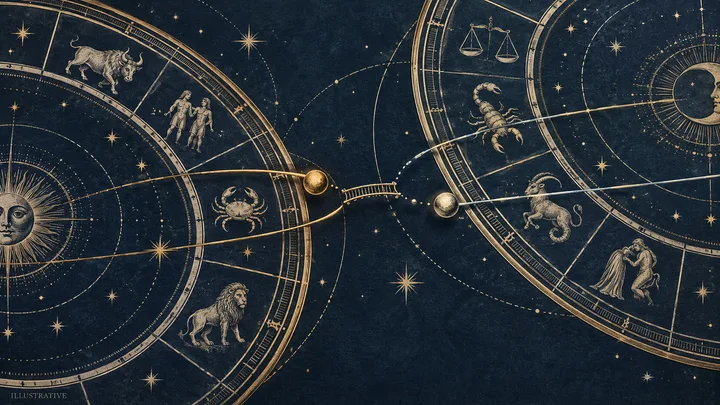
Synastry can clarify why two people feel the same love but express commitment through different kinds of effort. Start with the Moon, Venus, and Mars in both charts. The Moon shows what feels caring and safe. Venus shows how each person gives and receives affection. Mars shows how each person takes initiative, handles pressure, and turns desire into action. Then check the aspects between those planets, giving the closest contacts the most weight. A soft Moon-Venus contact may make affection easy, while a difficult Mars-Saturn contact can make one partner experience responsibility as delay, criticism, or blocked momentum. This is useful because it turns a vague argument about who cares more into three clearer questions: What does care feel like? What does love look like? Who starts the work? Use the reading to name a small, observable agreement. Synastry can explain the pattern. Your shared choices show how you live it.
Sources: Synastry - Astrodienst Astrowiki; Synastry - Cafe Astrology
Read Mars for initiative, timing, and the work itself
Mars answers the question that usually starts the fight: who moves first? In astrology, Mars describes drive, assertion, desire, instinct, and the way energy becomes action. It can show how a person pursues, confronts, protects a boundary, starts a task, or responds when a plan breaks. If the Moon is the felt need and Venus is the love style, Mars is the hand reaching for the door.
Compare the Mars signs as methods. Mars in cardinal signs often wants movement and may become impatient when a decision sits open. Mars in fixed signs can bring staying power, but it may resist being pushed into action before it has decided. Mars in mutable signs may adapt quickly and carry several priorities, yet can lose force when the task becomes repetitive or overly confined. These are tendencies, not verdicts. The rest of the natal chart tells you how the tendency is trained.
Now ask what “effort” looks like in motion. Is it initiation? Completion? Speed? Endurance? Physical work? Conflict repair? A partner with strong Mars may start everything and resent the slower partner. A partner with a quieter or more cautious Mars may do less visible starting but bring patience, refinement, or sustained attention once committed. The couple should measure the full task cycle, not only the first dramatic move.
Mars-Mars contacts show whether two people’s action rhythms cooperate or collide. Cafe Astrology describes flowing Mars-Mars contacts as support for shared goals and an instinctive understanding of each other’s methods. Hard contacts can create impatience, anger, or a need to work independently before coming together. That distinction fits household and relationship labor well. Some couples need joint action. Others need clear ownership and a return point after each person works separately.
Mars-Saturn is especially important when one partner says, “I have to push you to do anything.” The Mars person may feel blocked, judged, or slowed. The Saturn person may feel that Mars is careless, premature, or unwilling to respect limits. At its best, the contact teaches timing and responsibility. At its worst, every request becomes a test and every delay becomes proof of bad faith. Read it alongside the signs, degree, and other supportive contacts. A single hard aspect doesn’t get to write the whole story.
Imagine Maria’s Mars is in Aries and Daniel’s Mars is in Libra. Maria starts the difficult conversation as soon as she sees the problem. Daniel wants to consider both sides and find a fair opening. Maria calls him evasive. Daniel calls her aggressive. Their useful agreement might be procedural: Maria names the issue, Daniel gets one evening to think, and they return to the discussion at a fixed time. That arrangement respects both initiative and deliberation. It turns a Mars mismatch into a shared rhythm.
But sometimes the complaint isn’t about timing at all. If one partner repeatedly agrees, accepts reminders, and still leaves the work to the other, Mars symbolism can’t soften the fact that the pattern is being chosen. Astrology can explain why the behavior feels activating. It can’t rename avoidance as a valid difference in style. That boundary protects the reading from becoming an excuse.
Read Mars last among the three personal planets because action makes the earlier layers visible. If you know what care feels like and what love looks like, you can ask for effort in a form the other person can actually perform.
Sources: Synastry: Mars-Mars Aspects - Cafe Astrology; Synastry - Cafe Astrology
Rank the pattern instead of collecting aspects
A synastry comparison becomes confusing when every contact receives the same weight. Ten small observations can hide one central pattern. Rank the evidence. The question isn’t “How many aspects do we have?” It’s “Which contact best explains the repeated disagreement, and which contacts help us work with it?”
Start with the closest relevant aspect between the personal planets. A one-degree Moon-Saturn contact deserves earlier attention than a six-degree Venus-Mars contact when the argument concerns emotional labor and reliability. Then ask whether the same theme repeats in the signs. A cautious Moon, a steady Saturn, and an earth-heavy pattern may reinforce the need for structure. A lively Mars contact may explain why promises sound sincere in the moment but fail under routine pressure. You’re looking for agreement between layers.
Second, separate attraction from cooperation. Venus-Mars can show chemistry and pursuit. It doesn’t automatically show who will remember the appointment or repair the conflict. Strong attraction may make a couple more willing to learn. It may also make a mismatch harder to name because desire keeps interrupting the practical question. Hold both truths. Chemistry is relevant. It isn’t the same as shared labor.
Third, look for support. A difficult contact is not the same as a doomed pattern. A soft Moon-Venus aspect may help partners return to kindness. A supportive Mercury contact may let them explain the problem without turning it into a verdict. Saturn can lend staying power when both partners consent to responsibility. The chart is a network. Read the pressure point and the resource beside it.
When closeness and relevance point in different directions, keep both facts visible. A two-degree Venus-Mars square is close and speaks directly to pursuit, but a five-degree Moon-Saturn contact may better describe the complaint about reliability. Start with the closer contact, then ask whether the wider one repeats the same subject. If it does, call it a secondary layer, not proof that the wider aspect outranks the closer one. If it doesn’t, leave it in the background. The six-degree orb sets the field of possible contacts; it doesn’t make every contact equally loud. This simple rule prevents a dramatic keyword from taking over the reading just because it sounds familiar. It also gives you a clean way to explain the result to a partner who wants to know why one aspect came first: closeness establishes strength, while the lived question establishes relevance.
Here is a practical ranking for the love-versus-effort question. First, read the closest contact that directly touches Moon, Venus, Mars, or Saturn. Second, compare the signs of the planets involved, because the aspect tells you how the energies meet while the signs tell you how they operate. Third, check the wider pattern for support or repetition. Fourth, test the interpretation against three recent examples. If the symbolism doesn’t help you describe the actual behavior, set it aside.
Consider this illustrative comparison: Maria has Virgo Moon, Libra Venus, and Aries Mars. Daniel has Aquarius Moon, Scorpio Venus, and Libra Mars. Suppose Maria’s Venus forms a close square to Daniel’s Mars, while her Moon forms a supportive contact to his Venus. The first contact can describe attraction mixed with mismatched timing. He may pursue with intensity when she wants a measured exchange. The second can describe genuine affection and a capacity to enjoy each other. The relationship has warmth and friction. The useful reading is not “good” or “bad.” It is “affection is available, but pursuit needs consent and pacing.”
Add a close Mars-Saturn contact and the meaning changes again. Now a request for initiative may activate fear of criticism or a habit of delay. The couple needs a task with an owner, a deadline, and a review point. Add a supportive Moon-Mercury contact and the conversation may become easier once both people stop arguing about motives. The pattern grows by combination. That is why a list of isolated keywords rarely serves a real couple.
If the chart has very few exact contacts among the planets you’re using, let the reading stay modest. Don’t force a grand theory from thin material. The available placements may show different preferences without revealing one clear synastry engine for the conflict. You can still compare signs and discuss the behavior. A restrained interpretation is more useful than a dramatic one the chart can’t carry.
A useful test is to write three versions of the same request. The lunar version says, “I need to feel remembered, so please take the lead on one recurring responsibility.” The Venus version says, “I need appreciation, so please tell me what you noticed before you ask for the next thing.” The Mars version says, “I need initiative, so please make the first move by Thursday.” These requests can concern the same task, but they solve different layers of the disagreement. That is what ranking gives you.
Now test the result against the four questions from the opening. Is this a preference, such as wanting planned dates? Is there a capacity problem, such as a schedule that truly leaves no room? Is there willingness, shown by a partner proposing another workable route? And is there follow-through, visible without repeated reminders? Synastry is strongest at the first question and useful for the second and third when it gives language for a person's rhythm. The fourth is measured in ordinary behavior.
Watch for the difference between a preference and a threshold. A preference is a way you like care to arrive. A threshold is a condition you need for the relationship to remain workable. Synastry can help explain the preference. You still have to name the threshold in plain language. “I prefer planned dates” is not the same as “I won’t continue carrying every plan alone.” That sentence makes the decision visible and keeps astrology from replacing your judgment.
Rank interpretations by relevance, closeness, repetition, and practical usefulness. Then stop. A reading should leave you with one pattern to discuss, not a new obligation to decode every line in the chart. One clear pattern is enough to begin together.

Sources: Synastry - Astrodienst Astrowiki; Partner horoscopes - Astrodienst FAQ; Synastry: Mars-Mars Aspects - Cafe Astrology
Turn the reading into one fair conversation
The reading has done its job when it gives the couple a better sentence. Don’t lead with the chart. Lead with the moment that keeps hurting. “When I have to remind you, I stop feeling like your partner.” “When you ask me to decide immediately, I stop feeling safe enough to respond.” Those sentences contain the real material. The placements help you hear the pattern with more precision.
Use the three layers as prompts. For the Moon, ask: “What helps you feel cared for when life is ordinary, not only when there is a crisis?” For Venus, ask: “Which gestures make you feel chosen, appreciated, or desired?” For Mars, ask: “Where do you need me to initiate, and where do you need room to act in your own way?” Give each person time to answer without correcting the astrology or the memory.
Then name one behavior. Keep it small enough to observe and large enough to matter. One partner might own the next two date plans from start to finish. The other might take responsibility for checking in after a difficult conversation. One might ask, “Do you want comfort, a plan, or space?” The other might answer plainly instead of expecting the need to be guessed. A chart can suggest the translation. The agreement proves whether the translation works.
If you use a report, write down the supplied placements, known degrees, zodiac reference, and orb before discussing the interpretation. That small record tells both partners what the reading actually covers and keeps a sign comparison separate from a degree-based contact.
Ask permission before applying a partner’s placements to a sensitive issue. A chart belongs in the conversation only when both people can speak freely. Don’t say, “Your Mars proves you’re selfish,” or “Your Saturn means you’ll never change.” Say, “This Mars pattern gives us a way to talk about how we start things. Does that match your experience?” The question leaves room for lived knowledge, which no symbol should replace.
Listen for the answer that includes a change in ownership. “Tell me what to do” can sound cooperative while keeping the planning burden with the same person. A stronger answer is, “I’ll choose the task, set the reminder, and tell you when it’s done.” Likewise, “I’ll try to be more affectionate” is warm but hard to test. “I’ll greet you without looking at my phone, and I’ll plan one evening for us this week” gives Venus something real to receive. Concrete language turns an emotional complaint into shared work.
If the conversation gets heated, pause the chart. The Moon may be activated, Mars may be pushing for an immediate answer, and Saturn may make one partner go quiet. You don’t need to solve all three layers in one sitting. Agree on when you’ll return. A pause with a return time is different from disappearance. That small distinction often tells you whether the couple is creating safety or merely postponing the same argument.
Write the agreement down in one sentence. Include the action, the owner, the time, and the sign that it’s complete. “Daniel will choose and book Saturday’s plan by Wednesday evening” is clearer than “Daniel will make more effort.” Memory changes when people feel criticized, and a written sentence keeps the promise visible without turning it into a courtroom exhibit.
Review it after two or three ordinary opportunities to practice it. Ask four plain questions. Did the behavior happen without one person becoming the manager? Did the other partner recognize it as care? Did the arrangement respect the giver’s actual capacity? When it failed, did the partner repair the miss without being chased? If the answer is no, stop searching for a more flattering interpretation and discuss willingness. The chart can keep offering symbols forever. A relationship needs a decision sooner.
Keep the evidence ordinary. A grand anniversary gesture can hide a daily imbalance, while a quiet habit can carry a relationship through a hard month. Look at the unglamorous moments: who notices the empty cupboard, who starts the repair after a sharp exchange, who makes room when the other person is tired, and who follows through when nobody is watching. These details give the Moon, Venus, and Mars somewhere to land. They also stop the reading from becoming a performance about who can describe love most beautifully.
The same method can serve different seasons. Early dating may bring Venus and pursuit forward. Shared housing may make Moon needs and Saturn responsibilities impossible to ignore. A stressful month may expose Mars timing. The placements haven’t changed. The question has. Keep the chart stable and update the question, the owner, and the deadline.
A relationship can contain real love and an unfair division of effort. It can also contain different rhythms that become workable once they’re named. Synastry clarifies the difference by separating emotional need, affection style, and action under pressure. Your decision comes after that clarity: will both partners make one specific change and carry it without being managed?
Start with this sentence tonight: “We agree that we love each other. I want us to compare what effort feels like to each of us, then choose one thing we’ll each carry this week.” That conversation is the point where interpretation becomes partnership.
Sources: Synastry - Astrodienst Astrowiki; Synastry: Moon-Venus Aspects Between Charts - Cafe Astrology; Synastry - Cafe Astrology
A little more clarity
Can synastry show which partner is trying harder?
No single synastry aspect can measure effort or assign a winner. A chart comparison can show different needs, love styles, and action rhythms, especially through the Moon, Venus, Mars, and relevant Saturn contacts. Use those symbols to define what each partner means by effort, then compare the interpretation with repeated behavior. The fair question is not who has the better chart. It’s whether the work is visible, shared, and followed through without one person managing the other.
What if our birth times or degrees are missing?
You can still compare supplied Moon, Venus, and Mars signs and any known planetary contacts. Without reliable birth times, leave houses and the Ascendant aside. Without degrees, don’t claim a precise aspect or rank contacts by exactness. A focused sign comparison can still clarify different ways of feeling cared for, giving affection, and taking initiative. Keep the conclusion at that level, and treat the chart as a prompt for a specific conversation rather than a complete calculation.
Sources & further reading
- Synastry - Astrodienst Astrowiki
Defines synastry as comparison of horoscopes, interaspects, chart layers, and the need to read each natal chart first.
- Partner horoscopes - Astrodienst FAQ
Explains synastry chart construction and how aspect orbs are handled in chart comparison.
- Synastry: Moon-Venus Aspects Between Charts - Cafe Astrology
Supports the reading of Moon-Venus contacts as affection, emotional balance, appreciation, and possible feeling undervalued.
- Synastry: Mars-Mars Aspects - Cafe Astrology
Supports the reading of Mars-Mars contacts as shared action rhythm, competition, impatience, and cooperation toward goals.
- Synastry - Cafe Astrology
Supports core meanings for Venus and Mars in synastry and the contrasting effects of conjunctions, flowing aspects, squares, and oppositions.
Synastry Comparison Report
Enter known placements for two people. Get an input-by-input comparison, selected aspect calculations and a clear record of what remains uncertain.
Compare our placements