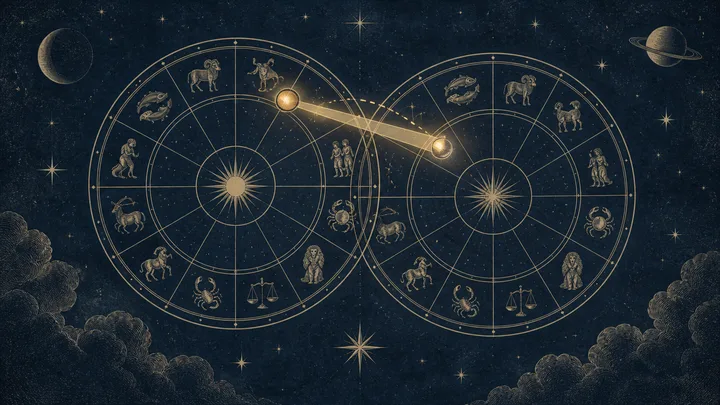
Imagine a contact that looks stronger on paper than it feels
Imagine Maria and Daniel comparing placements before a conversation about where their relationship is going. Maria has Venus at 18° Gemini. Daniel has Mars at 24° Virgo. Their planets sit 96° apart, which is 6° from an exact square. A report using a six-degree orb can include the contact, but it shouldn't call it a powerful Venus-Mars square.
A better sentence is simple: their Venus-Mars square is wide. It may describe a difference in affection, pursuit, timing, or desire, yet it shouldn't lead the reading by itself. The degree gap changes the contact's rank. It doesn't erase its subject.
So the question isn't whether six degrees counts. It's what six degrees can support. You can name a loose theme and give the couple something to observe. You can't use one wide contact to prove attraction, emotional safety, commitment, or an outcome. Astrology gives the pattern a place. The relationship shows how much life it has.
For Maria and Daniel, the useful next question is practical: when one shows interest through words or warmth and the other through action, do they recognize each other's gesture? That question keeps the aspect open without letting it take over.
Sources: Orbs (or rays) - Skyscript Glossary; An Introduction to Aspects and Chart Shaping in Natal Astrology
What the six-degree number actually measures
An aspect is the angular distance between two chart points. A square is exact at 90°. If two planets sit 96° apart, their square has a 6° orb. The number measures the distance from exactness. It isn't a compatibility score, a percentage, or a measure of how intensely two people feel.
Astrologers use different orb systems. Skyscript describes wider allowances for conjunctions, squares, trines, and oppositions, with a smaller allowance for the sextile. It also records the traditional practice of giving the Sun and Moon greater influence than other planets. Campion's aspect guide likewise says that exact aspects carry more strength as loose aspects weaken. A six-degree orb is therefore a clear working rule, not the only possible rule.
This report uses supplied Moon, Venus, and Mars placements, optional degrees, and selected major aspects within a six-degree orb. It doesn't calculate missing positions, houses, or a full natal chart from birth details. If a contact falls at 6°00', it sits inside this method. At 6°01', it falls outside a strict six-degree boundary. Keep a nearby sign relationship separate instead of quietly widening the rule.
Use a small vocabulary ladder: tight or exact, close, moderate, wide, and loose. Those words tell the reader how much space the contact deserves. They don't pretend that every astrologer measures emphasis in the same way.
A six-degree synastry orb should make your wording more careful, not your reading empty. If two supplied planetary positions sit six degrees from a major aspect, call it a wide or loose contact. Name the aspect and the planets, describe the theme as available but diffuse, and rank it below a closer contact that repeats the same story. A 0° Venus-Mars square deserves stronger language than a 6° Venus-Mars square. A 6° Moon contact may still matter because traditional astrology gives the Moon greater orb. Use the signs as the style of the exchange, then use the degree distance to set volume. If you don't have degrees, discuss sign-based relationships, but don't pretend you've measured an aspect. The Synastry Comparison Report reads supplied Moon, Venus, and Mars signs, uses optional degrees for selected major aspects within a six-degree orb, and doesn't calculate houses. Ask which contact is tightest, which theme repeats, and what daily behavior would show that theme.
Sources: Orbs (or rays) - Skyscript Glossary; An Introduction to Aspects and Chart Shaping in Natal Astrology; Synastry Aspects Explained - The Complete Guide
The same Venus-Mars square at 1°, 4°, and 6°
Consider one Venus-Mars square at three distances. The aspect stays the same. The report's voice changes.
At 1°: 'Your Venus-Mars square is a central attraction pattern. Affection and pursuit meet with force, so talk about pace, desire, and how each of you shows interest.' This contact can lead the discussion, while the rest of the chart supplies context.
At 4°: 'Your Venus-Mars square gives the relationship a noticeable pull, with different styles of affection and initiative. Watch for the moments when one wants to linger and the other wants to act.' The theme remains clear, but the report asks for lived confirmation.
At 6°: 'Your Venus-Mars square is wide. It may describe a background difference in how affection is offered and desire is pursued. Treat it as supporting evidence unless another contact repeats the pattern.' This is not a weaker version of the same dramatic sentence. It is a different rank.
The next question changes, too. At 1°, ask how you handle quick chemistry. At 4°, ask where the difference becomes noticeable. At 6°, ask whether the pattern appears and what stronger contact might carry it. Distance changes emphasis, wording, and the question you give the couple.
Sources: Application - Skyscript Glossary; An Introduction to Aspects and Chart Shaping in Natal Astrology; Synastry Aspects Explained - The Complete Guide
Let the angle choose the kind of language
Orb and aspect do different jobs. Orb sets concentration. The angle sets the kind of exchange.
A conjunction blends, so a wide one may place two themes in the same field without fusing them. A square presses for adjustment, so a six-degree square is better described as a possible friction point than a constant conflict. A trine offers ease, but a wide trine may remain an unused resource. An opposition shows a polarity that asks for balance. A sextile offers an opening, and because many systems use a tighter sextile orb, a six-degree sextile needs especially modest wording when the method includes it.
The planets then make the sentence personal. Moon speaks to care and response. Venus speaks to affection, values, and pleasure. Mars speaks to desire, effort, and pursuit. A loose Moon contact may deserve attention because it touches daily emotional life. A loose Venus-Mars contact may describe a difference in how interest is offered and received. Neither becomes central just because its symbols sound compelling.
Keep the report centered on the supplied Moon, Venus, and Mars placements. Other planets may matter in a broader synastry reading, but they shouldn't crowd out the comparison this report actually makes.
Sources: Orbs (or rays) - Skyscript Glossary; An Introduction to Aspects and Chart Shaping in Natal Astrology; Synastry Aspects Explained - The Complete Guide
Signs describe the style of the contact
Degree geometry and sign symbolism answer different questions. The degree aspect tells you the angular relationship. The signs tell you how the planets express it.
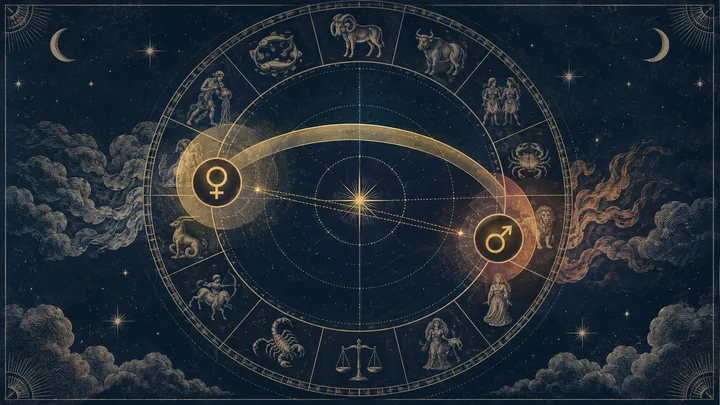
A six-degree Venus-Mars square with Venus in Gemini and Mars in Virgo may describe lively words meeting practical action. One person may show interest by talking; the other may show it by fixing a detail. With Venus in Taurus and Mars in Aquarius, the same wide square may ask how steadiness and independence can share room. The orb is unchanged. The story is not.
These are interpretive examples, not calculated personal charts. Use sign keywords to give the contact texture, never to replace the angle. Two signs can suggest an elemental or modal relationship, but they can't supply a missing degree.
An out-of-sign contact needs the same clarity. If the degrees make a close aspect while the signs tell a more complicated story, name both layers and say which one leads. A useful sentence might be: 'This is a wide Venus-Mars square by degree, with Gemini and Virgo giving it a mental-versus-practical style.' Shape, strength, and style stay visible together.
Sources: Application - Skyscript Glossary; An Introduction to Aspects and Chart Shaping in Natal Astrology
Applying and separating require more than two sign placements
Applying means the planets are moving toward exactness while within orb. Separating means they have passed exactness and are moving apart. The faster planet usually makes the application. Retrograde motion can change the picture, so the label requires motion data, not just two signs or two degrees.
In a loose contact, applying may support language such as 'developing,' while separating may suggest something already familiar. Those are interpretive shades. They aren't promises about what the relationship will become. The distinction is especially central in horary and event work, so don't import its predictive force into a static synastry comparison without a clear method.
If degrees are missing, leave applying and separating out. If degrees are present but motion isn't available, leave them out, too. Name the aspect and its width first. Add motion only when it genuinely sharpens the sentence.
Sources: Orbs (or rays) - Skyscript Glossary; Application - Skyscript Glossary; An Introduction to Aspects and Chart Shaping in Natal Astrology
Rank the contact before you interpret it
A useful comparison tells you what to read first. Use this order: closeness, planets, aspect, signs, then repetition.
Closeness sets emphasis. A 0° Moon, Venus, or Mars contact leads a 6° contact of the same type. Among contacts with similar widths, give the personal planets priority because they speak directly to feeling, affection, desire, and daily action. The angle then tells you whether the exchange blends, presses, flows, or pulls toward balance.
Next, look for repetition. A loose Venus-Mars square beside a close Moon-Venus trine may color attraction without defining the whole bond. If no other contact echoes the loose square, keep it brief. A report should make the ranking visible instead of giving every line in an aspect table equal space.
The practical rule is: tight personal-planet contacts first, repeated themes next, loose single contacts after that. Then turn the strongest supported theme into a question. 'When one of you shows care through warmth and the other through action, do you both recognize it?' That makes the contact useful without turning it into a verdict.
Sources: Application - Skyscript Glossary; An Introduction to Aspects and Chart Shaping in Natal Astrology; Synastry Aspects Explained - The Complete Guide
End with one conversation, not a verdict
Start a report sentence with the data: 'Your Venus-Mars square is 6° wide.' Then give its rank and theme: 'It may describe a difference in desire and approach, so treat it as supporting evidence rather than the lead contact.' The reader knows what appears, how much weight it carries, and where to look in daily life.
Use may and can to mark a real interpretive opening, not to avoid a position. Cut both extremes. A loose aspect doesn't guarantee chemistry, and it doesn't mean nothing. It belongs in the reading when the method includes it, but its meaning grows through the signs, the other supplied contacts, and the couple's experience.
For Maria and Daniel, the next conversation is this: 'When I show interest by talking or slowing down, and you show interest by acting or solving, which of us feels missed?' They can listen for an example. If the pattern fits, they have a useful thread. If it doesn't, they can let the loose contact rest.
That is the right use of a six-degree orb. Include the contact. Lower its volume. Let the relationship show whether it deserves more.
Sources: Orbs (or rays) - Skyscript Glossary; Application - Skyscript Glossary; An Introduction to Aspects and Chart Shaping in Natal Astrology; Synastry Aspects Explained - The Complete Guide
Sources & further reading
- Orbs (or rays) - Skyscript Glossary
Supports the definition of an orb, common modern allowances, and the traditional distinction between aspect and planetary orbs.
- Application - Skyscript Glossary
Supports the meanings of applying motion, perfection, the faster planet, retrograde motion, and mutual application.
- An Introduction to Aspects and Chart Shaping in Natal Astrology
Supports aspect geometry, major and minor aspect distinctions, changing orb strength, and applying versus separating language.
- Synastry Aspects Explained - The Complete Guide
Supports practical synastry orb comparisons, tighter-contact emphasis, planet-sensitive weighting, and synthesis over single-aspect verdicts.
Synastry Comparison Report
Enter known placements for two people. Get an input-by-input comparison, selected aspect calculations and a clear record of what remains uncertain.
Compare our placements