The surprising planet is a clue, not a verdict
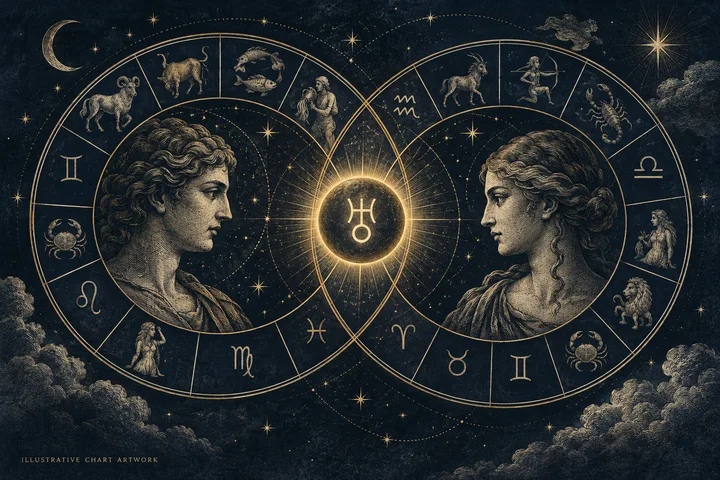
You open the synastry grid expecting Venus and Mars to tell the story. Instead, Pluto is tightly connected to the Moon. Neptune sits on Mercury. Uranus touches Venus within one degree, while the familiar Sun and Moon contacts are wide and quiet. The chart seems to have changed its subject.
It has not. The unexpected planet often shows the atmosphere around the relationship's ordinary exchange. The Moon brings feeling and habit. Mercury brings speech and thought. Venus brings affection and pleasure. Mars brings desire and assertion. A slower or less expected planet can intensify, unsettle, idealize, deepen, or test those functions.
Let the surprising planet name the climate, then return to the personal planets for the lived exchange. A tight Neptune-Moon contact may describe tenderness, longing, and blurred edges. It does not prove a soul bond. A Pluto-Venus contact may bring magnetism and power questions. It does not prove obsession. The chart gives you a pattern to read, not a verdict to obey.
The strongest synastry contact is not always the most familiar one. A close Pluto, Neptune, Uranus, Saturn, Jupiter, or Chiron contact can describe the bond's pressure or mystery, but it does not replace the personal planets that show affection, desire, speech, and emotional response. Read the unexpected planet as a lens first. Then ask what it touches, how exact the aspect is, which sign and house carry it, and whether the same theme repeats elsewhere. A tight Neptune-Moon conjunction may explain unusual tenderness and uncertainty, while Venus-Mars or Mercury-Moon contacts show how attraction and daily understanding move through that atmosphere. Rank close, repeated themes. Use a six-degree orb as the working limit for this comparison, and narrow it when a contact stands alone. A Synastry Comparison Report can organize supplied placements and optional degrees, but it does not calculate a natal chart from birth details.
Sources: Synastry: Love and Relationship Astrology; Aspects Between Charts
Clean up the inputs before you interpret the surprise
Record the two sets of placements separately. For each person, note the sign and degree of the Sun, Moon, Mercury, Venus, Mars, Jupiter, Saturn, Uranus, Neptune, and Pluto. Add the Ascendant and house cusps only when the birth times are known and trusted. Mark the chart owner beside every placement.
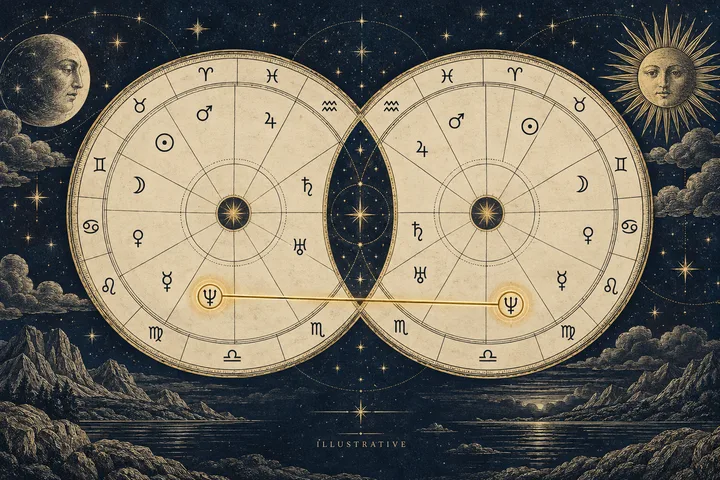
Write each contact as a complete line. For example: Person A's Pluto at 12 degrees Libra conjuncts Person B's Moon at 13 degrees Libra, with a one-degree orb. That sentence preserves the planets, owners, signs, aspect, and strength. It stops the planet person and the receiving person from changing places halfway through the reading.
This article uses a six-degree orb for selected major aspects, with tighter contacts receiving more weight. If degrees are missing, stay with sign relationships and possible themes. If birth time is missing, do not claim houses or angles. A placement-only comparison can still say something useful. It simply answers a narrower question.
Sources: Partner Horoscopes; Synastry - Astrodienst Astrowiki
A worked example: Neptune-Moon leads, but Venus still speaks
Imagine Maria and Daniel comparing known placements from a chart report. Maria's Moon is at 18 degrees Pisces. Daniel's Neptune is at 19 degrees Pisces. Their Neptune-Moon conjunction is one degree, the tightest contact in the grid. Their other clear contacts include Maria's Venus trine Daniel's Mars at four degrees and Maria's Mercury square Daniel's Saturn at three degrees. These placements are illustrative. They are not a calculation for real people.
Neptune-Moon gives the relationship a receptive, impressionable tone. Maria may feel that Daniel understands moods she has not explained. Daniel may awaken imagination, compassion, and longing. They may share music, dreams, spiritual language, or a sense of recognition. But Neptune can blur edges. Maria may fill gaps in Daniel's words with hope. Daniel may feel responsible for moods he cannot actually manage.
The Venus-Mars trine changes the reading. Attraction has a direct channel. Mercury square Saturn adds the work. Maria's ideas may meet Daniel's caution or correction. He may help give an idea form, or she may edit herself before finishing a thought. Neptune explains why the bond feels tender and hard to define. Venus and Mars show attraction. Mercury and Saturn show whether the tenderness can survive clear speech.
The tightest planet opens the door. The other contacts tell you what enters the room.
Read the unexpected planet through the personal planet
Ask two questions in order. What does the unexpected planet bring? What part of the other person's life receives it? The second question keeps a symbolic reading connected to experience.
Saturn contacting the Sun, Moon, Mercury, Venus, or Mars can bring structure, restraint, judgment, or commitment. The personal-planet person may feel steadied and supported, or watched and limited. Uranus contacting Venus or the Moon can awaken freedom and a new style of closeness. It may also expose different needs for space and regular contact.
Neptune touching the Moon, Venus, or Mercury can bring tenderness and imagination, along with projection. Pluto touching Venus, Mars, the Moon, or the Sun can expose desire, fear, attachment, and power. Jupiter can enlarge confidence and generosity. Chiron can open a sensitive place that asks for care.
Write the interpretation as a practice, not a label. Neptune to Mercury may ask for clearer speech. Pluto to Mars may ask for cleaner handling of anger and desire. Saturn to Venus may ask whether affection can survive honest limits. The planet describes the theme. The people decide how they carry it.
Sources: Synastry: Love and Relationship Astrology; Saturn in Synastry; Karma & Relationships
Let the aspect describe how the energy moves
Planet symbolism tells you what is moving. The aspect tells you how it moves. A conjunction fuses the two functions and can feel immediate. An opposition makes the other person vivid and often calls for negotiation. A square creates friction that demands action. A trine offers a natural flow. A sextile gives an opening that becomes useful when someone takes it.
Do not turn those words into grades. A trine can remain unused because the gift feels automatic. A square can become a practiced skill because it keeps asking for a better response. Pluto square Venus may bring attraction and fear of loss together. Pluto trine Venus may let intensity move more easily. Both can transform a relationship; the square simply makes the negotiation harder to ignore.
Neptune conjunct Mercury may blend thought and feeling into a private language. Neptune opposite Mercury may make one person's words seem to carry meanings the other person must decode. In either case, clarity matters. Name what was said. Ask what was meant. An attractive aspect does not excuse confusion.
Sources: Synastry: Love and Relationship Astrology; Aspects Between Charts
Use sign and house to locate the relationship's language
After planet and aspect, read the sign. It shows the style in which the contact speaks. Neptune in Pisces emphasizes permeability, compassion, imagination, and spiritual feeling. Neptune in Gemini may express the same longing through words, questions, messages, and changing interpretations. The sign does not replace the planet. It gives the planet a vocabulary and pace.
House overlays show the life area where one person's planet lands in the other person's chart. Neptune in a partner's seventh house can bring idealization and uncertainty into the relationship itself. In the third house, the same planet may color messages, learning, and conversation. This layer is useful only when the birth time supports it.
Read both directions. One person's Moon may fall in the other's fifth house while the Neptune person lands in the first person's seventh. One partner may feel play and emotional expression. The other may feel partnership, projection, and questions about what the bond should become.
When houses are unavailable, stay with sign and aspect. A narrow reading with clean inputs beats a complete-looking reading built on a guessed birth time. House overlays add a scene. Interchart aspects show how the planetary functions meet.
Sources: Aspects Between Charts; Romantic Compatibility Synastry House Overlays
Rank the chart by closeness, repetition, and lived evidence
A chart can contain many attractive symbols. Give the reading an order. First, look at close contacts to personal planets and angles. Next, group contacts by theme. Several aspects pointing toward communication, desire, or responsibility deserve more weight than one isolated keyword. Then check whether the theme repeats in both directions, in house overlays, or in a natal pattern you actually have available.
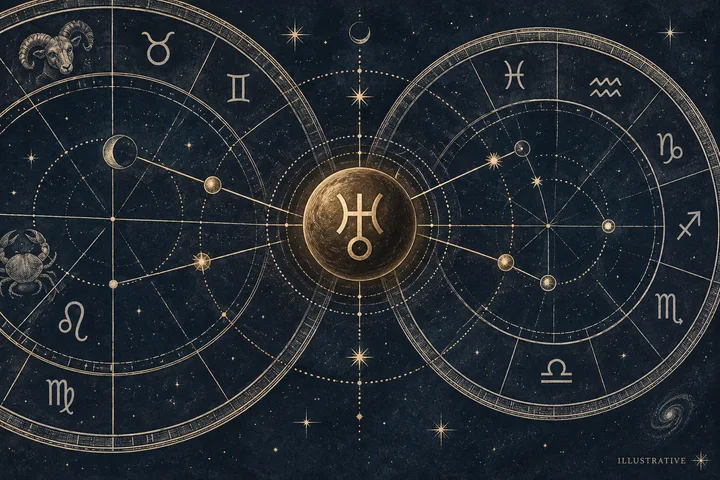
A close outer-planet contact still matters. Place it beside the other evidence. A one-degree Uranus-Venus contact may explain why the relationship feels startling and alive. A four-degree Moon-Mercury trine may explain how the couple repairs misunderstandings. The first contact catches the eye. The second may determine whether the relationship can be lived.
Test the order against observation. Does one person actually feel watched, freed, idealized, challenged, or encouraged? Does the pattern appear in planning, silence, money, desire, independence, or repair? If an interpretation needs several invented motives to fit, lower its rank. If one contact explains a repeated experience and another supports it, raise the theme.
Your final ranking should fit on one page. If every contact is equally urgent, none is guiding the reading.
Sources: Synastry: Love and Relationship Astrology; Aspects Between Charts; Synastry - Astrodienst Astrowiki
The strongest exception: when the outer planet really does lead
What if the unexpected planet is exact, angular, and repeated, while the personal-planet contacts are broad? Then the outer planet can lead. Suppose Pluto is within one degree of the other person's Ascendant and also squares Venus and Mars. Its theme has entered the comparison through several doors. It is no longer background atmosphere.
The same applies when Neptune touches the Moon, Mercury, and Descendant, or when Saturn contacts the Sun and Venus. The repetition makes the planet a central organizing force. Let it lead because the chart keeps returning to it, not because outer planets deserve a dramatic title.
Even here, avoid a verdict. Central Pluto can be honest transformation or a struggle over control. Central Neptune can become devotion with clear agreements or longing fed by omissions. Central Saturn can become durable practice or a bond that punishes change. The chart shows the field. The people show the response.
The rule is firm: let an unexpected planet lead when it is close, personal or angular, and repeated. Otherwise, let it describe the atmosphere while the personal planets describe the exchange.
Sources: Partner Horoscopes; Synastry - Astrodienst Astrowiki; Karma & Relationships
Make one audit, then take one practical step
Before you compare the charts again, make a short audit sheet. Record which signs and degrees you actually have, whether the birth times support houses and angles, and which orb you used. Write the planet owners every time. Then sort the contacts into attraction and desire, emotional response, communication and meaning, and structure or pressure.
Put the unexpected planet into the category it actually affects. Neptune-Moon belongs in emotional response and meaning. Uranus-Venus belongs in attraction and freedom. Saturn-Mercury belongs in communication and structure. One contact can occupy two columns. That is a discovery, not a problem.
Finish with one supporting contact and one observable question. For Neptune-Moon, ask, What helps us tell empathy from assumption? For Uranus-Venus, ask, How can we protect freedom without making affection unpredictable? For Pluto-Venus, ask, Where does intensity become pressure, and how will we name it early? Keep the question small enough to use this week.
If you already know the Moon, Venus, and Mars signs and can optionally supply degrees, a Synastry Comparison Report can organize those placements and selected major aspects. It does not calculate a natal chart from birth details or decide whether a relationship should continue. It gives you a cleaner map for the question the chart makes necessary.
Sources: Partner Horoscopes; Synastry - Astrodienst Astrowiki
Return to the opening surprise with the whole chart in view
The planet neither person expected may still be the contact you remember. That is fine. Neptune can set the emotional atmosphere. Venus and Mars can supply direct attraction. Mercury and Saturn can test whether the meaning survives clear speech. A relationship can feel mysterious and still need ordinary agreements.
The better reading does not crown one symbol. It gives each contact a job, ranks the repeated themes, and leaves room for the strongest exception. If the outer planet is close, personal or angular, and echoed elsewhere, let it lead. If not, let it frame the story while the personal planets show how the story is lived.
Take one action from the audit. Clarify the message. Set the meeting time. Name the boundary. Make the promise concrete. The unexpected planet has done its work when it sharpens your attention. The relationship answers through what you both do next.
Sources: Synastry: Love and Relationship Astrology; Aspects Between Charts; Synastry - Astrodienst Astrowiki
Sources & further reading
- Synastry: Love and Relationship Astrology
Supports the roles of Venus, Mars, Jupiter, outer planets, personal planets, angles, and major interchart aspects in relationship interpretation.
- Aspects Between Charts
Supports distinguishing conjunctions, oppositions, squares, trines, and sextiles by the kind of interaction they describe between charts.
- Partner Horoscopes
Supports treating partner comparison as a chart-to-chart method and keeping the stated comparison inputs and technical settings consistent.
- Synastry - Astrodienst Astrowiki
Supports reading interchart contacts alongside natal context and separating planetary relationships from broader chart emphasis.
- Saturn in Synastry
Supports Saturn's relationship meanings of binding, responsibility, reality, resistance, and possible restriction in personal-planet contacts.
- Karma & Relationships
Supports comparing repeated personal and outer-planet relationship themes without reducing one contact to a complete relationship verdict.
- Romantic Compatibility Synastry House Overlays
Supports using house overlays to identify the life areas where one person's planets affect the other person in a relationship comparison.
Synastry Comparison Report
Enter known placements for two people. Get an input-by-input comparison, selected aspect calculations and a clear record of what remains uncertain.
Compare our placements