Imagine the attraction is real, but the welcome feels different
Imagine Maria and Daniel leaving a crowded dinner after their third date. They’ve been drawn to each other from the first week. Daniel reaches for Maria’s hand in the taxi. Maria smiles, but she’s already thinking about the conversation they avoided at dinner. She wants him to ask what she felt. He wants the evening to stay light, affectionate, and uncomplicated.
The next morning, Daniel sends a playful voice note. Maria waits for a plan. Daniel reads her quietness as distance. Maria reads his easy charm as a way of skimming over what matters. Neither person has lost interest. The attraction is still there. The trouble is that they’re using different doors to enter the same room.
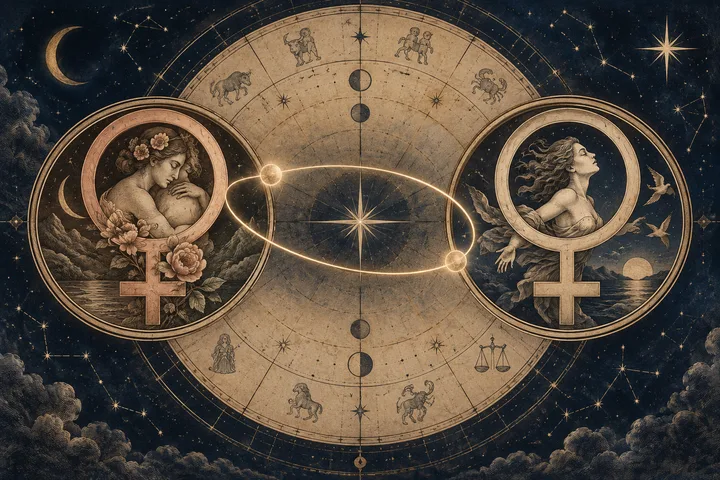
This is the heart of a Venus mismatch. One person may experience love through steady presence, another through freedom and surprise. One may want private tenderness before public commitment. Another may feel most loved when the relationship is named, shared, and made visible. Both can be sincere. Both can be attracted. Their preferred forms of closeness can still miss each other.
In a synastry reading, don’t turn this scene into a verdict. It’s an illustrative pattern, not a personal chart. The useful inputs are the actual Venus signs, optional degrees, and the Moon and Mars placements that show how affection is received and pursued.
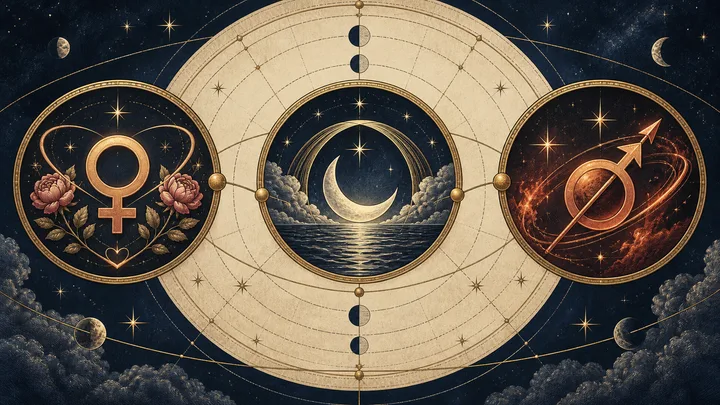
The useful question is narrower: what kind of closeness does each Venus sign recognize as love, and what other chart layer explains the pull? Venus gives the style of affection. The Moon describes the emotional welcome underneath it. Mars adds pursuit, appetite, and friction. A strong attraction can come from one layer while the daily feeling of being understood comes from another.
Notice how different this is from asking whether the pair is compatible in the abstract. Compatibility sounds like a single condition that a chart either contains or lacks. Closeness is more specific. It asks who initiates, who reassures, who needs room, who wants an answer now, and who needs time before an answer feels true. Venus can help you name those preferences without turning them into moral qualities.
The same sign can also behave differently depending on the rest of the chart. Venus in an earth sign may be more playful when Mars is strong in fire. Venus in an air sign may be more private when the Moon is in water. A sign gives a center of gravity, not every movement around it.
If you’re comparing only two Venus signs, keep your language modest and useful. Say that one person may prefer visible consistency while the other may prefer freedom and mental exchange. Then ask what happens in the actual relationship. Does the person follow through? Do they respond when the other person names a need? Astrology gives you a vocabulary for the contrast. Observation tells you which expression is present.
That distinction changes the reading. Maria and Daniel don’t need the same Venus sign to feel desire. They do need to learn what the other person’s affection looks like before they call a difference a lack of care. The chart can name the difference. Their choices give it a future.
What Venus shows when you compare two people
Venus is the first place to look when the question concerns attraction, pleasure, affection, taste, and the values that shape a bond. In a natal chart, Venus describes how a person approaches the heart of a relationship and what makes closeness feel pleasing or worthwhile. It also speaks to appreciation: what someone notices, enjoys, gives, and hopes to receive.
That makes Venus more specific than the loose phrase ‘love language.’ A love language can describe a preferred behavior, such as giving gifts or spending time together. Venus shows the style behind the behavior. Venus in Taurus may want reliability, touch, and a pleasure that can be felt in the body. Venus in Gemini may want wit, movement, and a partner who keeps the exchange alive. Venus in Scorpio may seek emotional loyalty and a bond that doesn’t stay at the surface. These are not fixed character labels. They’re starting points for reading the planet through its sign.
The element gives the first broad comparison. Fire Venus signs often want energy, directness, play, and the feeling that the relationship is alive. Earth Venus signs tend to trust what can be repeated, built, touched, or demonstrated over time. Air Venus signs often need conversation, mental room, and a relationship that stays responsive rather than heavy. Water Venus signs look for emotional resonance, privacy, and signs that the bond is felt beneath the words.
Elemental difference isn’t automatically a problem. Fire and air can animate each other. Earth and water can create a safe, nourishing rhythm. Fire and water may fascinate each other while missing each other’s pace. Air and earth may appreciate one another’s strengths while disagreeing about how much structure or emotional exposure the relationship needs. The element tells you what kind of translation may be needed. It doesn’t complete the reading.
Modality adds another question. Cardinal Venus moves toward what it wants and may show care by initiating. Fixed Venus builds attachment through consistency and may dislike sudden changes in the terms of closeness. Mutable Venus adapts, experiments, and keeps the relationship flexible, but can be harder to pin down. Two people can share an element and still want different timing because their modalities differ.
Then look at the sign itself. Venus in Libra may seek mutuality and graceful exchange. Venus in Capricorn may show love by making a serious plan and carrying responsibility. Venus in Sagittarius may need honesty, space, and a sense of adventure. Venus in Cancer may offer protection, memory, and a private home base. These expressions can overlap, but they don’t mean the same thing.
The strongest first conclusion is simple: different Venus signs describe different routes to pleasure and attachment, not the absence of attraction. Don’t ask which sign is more loving. Ask what each person counts as evidence of love. That question turns a sign comparison into something you can actually use.
Yes. Strong attraction can sit beside very different Venus needs because attraction and closeness are related, but they aren’t the same layer. Venus shows what each person values, enjoys, and offers in love. A Venus-Mars contact may create heat, while a Moon contact creates familiarity and emotional ease. Two Venus signs can also form a tense square or opposition that keeps drawing you together precisely because each person embodies a style the other doesn’t naturally understand. Read the signs first, then the exact Venus-Venus aspect, then the Moon and Mars contacts. The practical question isn’t whether the mismatch cancels the attraction. It’s whether you can translate each person’s preferred form of affection into a relationship both people can feel. Compare supplied Moon, Venus, and Mars placements, and add degrees when you have them.
Sources: Synastry: Love and Relationship Astrology; Venus, Goddess of Love, in Astrology; Love, Relationship Astrology: Venus in Elements
Why a Venus mismatch can make attraction stronger
A difference can create friction, but friction can keep attention alive. When two Venus signs want the same thing in exactly the same way, affection may feel natural and easy. When they want closeness through contrasting styles, each person can become unusually noticeable to the other. The attraction says, ‘There’s something here I don’t already know how to do.’
This is especially clear with a square or opposition between the two Venuses. In sign-based synastry, a square places the signs in different elements and often different needs. An opposition creates a polarity. The two people may recognize the other as compelling, even while the other person’s habits of affection feel excessive, insufficient, or badly timed. The aspect doesn’t erase the attraction. It gives the attraction a problem to solve.
A conjunction is different. The two Venuses occupy the same sign or close degrees, so the partners often share a taste for how affection should feel. That can be comforting. It can also make both people expect the other to understand without explanation. A sextile or trine usually gives more ease. The styles remain distinct, but they can cooperate without constant translation.
A quincunx or a wide sign mismatch can feel less obvious. The people may not share a clean element or modality, yet they keep noticing each other. One person’s style may seem odd, refreshing, or impossible to classify. This kind of attraction needs attention to lived behavior because the aspect alone won’t tell you whether the difference becomes curiosity or irritation.
Use the aspect to describe the pattern, not to rate the relationship. A square can force honest learning. A trine can hide important differences under pleasantness. A conjunction can make agreement so familiar that neither person names a need until the first real conflict. Ease is helpful. It isn’t the same as depth.
Degrees refine the picture. If the Venus positions are known, calculate the zodiacal distance and apply one consistent orb policy. This article’s report boundary uses selected major aspects with a six-degree orb when degrees are supplied. A close Venus-Venus square deserves more weight than a wide one. If one person’s degree is missing, read the signs and mark the aspect as unconfirmed rather than guessing.
The practical translation is worth more than the label. Suppose one person’s Venus wants public warmth and frequent signs of preference, while the other’s Venus wants privacy and uninterrupted time. The attraction may grow because each person offers what the other finds compelling. The same contrast can hurt if public warmth is demanded as proof or privacy is treated as rejection. Attraction becomes sustainable only when the difference is made legible.
A useful way to read the tension is to separate desire from demand. Venus in a sign can describe what feels beautiful or reassuring. It doesn’t give either person the right to force that experience from the other. Someone who wants public affection can ask for a hand at the party. Someone who wants privacy can ask to keep a tender conversation between the two of them. The request is clear. The demand turns the difference into a test.
This also explains why two people can feel instantly familiar and still disappoint each other. Familiarity may come from a shared element or a soft aspect. Disappointment may arrive when the familiar feeling is mistaken for identical needs. A Venus in Libra person may expect shared decision-making, while a Venus in Taurus person may expect calm and reliability. Both may value peace. They may build peace in different ways.
If a square is present, look for the repeating scene rather than the dramatic label. Does one person pursue a definition while the other asks for more time? Does one make a grand gesture while the other wants a practical repair? Does one use humor to restore closeness while the other needs a direct apology? Those scenes show how the Venus signs are meeting in life. They also show where a small agreement could interrupt the cycle.
The aspect becomes useful when it gives the couple a question they can answer together. ‘How do we show affection when we’re stressed?’ is better than ‘Why are you so different?’ ‘What counts as reassurance for each of us?’ is better than ‘Why don’t you love me the right way?’ The chart’s tension becomes a shared object of study instead of a weapon.
Sources: Synastry: Love and Relationship Astrology; Venus Square Venus Meaning, Synastry Chart Aspect
How to tell attraction from emotional ease
Venus can show why you’re drawn to someone. It doesn’t carry the whole question of feeling at home with them. For that, bring in the Moon. The Moon speaks to instinct, comfort, emotional habits, and the conditions that let a person soften. A couple can have vivid Venus attraction and still need a different kind of care to feel settled together.
Return to the imagined couple. Daniel’s light, playful affection may fit his Venus. Maria may need a Moon-level response before she can relax. If his Moon contacts her Venus, he may naturally offer the kind of tenderness she enjoys. If their Moons are in compatible signs, they may recover from difference more easily. If the Moon layer is strained, every Venus mismatch may feel more personal because neither person feels emotionally received underneath the romance.
Moon-Venus contacts often add tenderness and familiarity to attraction. The Moon person may feel cared for by the Venus person’s style, while the Venus person may enjoy being welcomed by the Moon person’s emotional world. The contact can smooth difficult patterns elsewhere. It can also create a blind spot if charm replaces a direct response to hurt. A sweet gesture isn’t the same as repair.
Compare the Moon signs before you decide that different Venus signs explain everything. Water Moons may need emotional privacy and a felt sense of loyalty. Air Moons may need words, perspective, and room to think. Earth Moons often trust steadiness and practical care. Fire Moons may need warmth, movement, and a partner who responds with life rather than caution. These are interpretive tendencies, not a script for a person.
Now ask a sharper question: when one person reaches for closeness, what does the other person do with the feeling underneath the request? A Venus mismatch may describe different rituals. A Moon mismatch may describe different nervous rhythms. If the pair can name both, the problem becomes workable. If they keep arguing only about date nights, texts, or public affection, the deeper need stays hidden.
You can use a simple two-column check. In one column, write what each Venus person offers naturally. In the other, write what each Moon person needs to feel safe enough to receive it. The gap between the columns is where translation belongs. Don’t ask someone to become a different sign. Ask for a behavior that carries the same care in a form the other person can recognize.
This is why strong attraction doesn’t prove emotional ease, and emotional ease doesn’t have to look dramatic. Venus may start the story. The Moon tells you whether the story has a place to rest.
Moon and Venus can also answer different questions. A Venus person may think, ‘I’m showing love by making this beautiful,’ while the Moon person is asking, ‘Can you stay with me while this is uncomfortable?’ The first person may feel generous. The second may feel alone.
Try the translation in both directions. If one person needs words, the other might offer a short, direct statement instead of assuming a touch will say enough. If one person needs physical presence, the other might make time to sit together without turning the moment into an interrogation. The goal isn’t to replace one person’s nature. It’s to make care cross the distance between two natures.
A strong Moon layer can hold a Venus difference with surprising grace. The couple may enjoy different music, social rhythms, or romantic rituals, yet still know how to soothe each other after a hard day. A strained Moon layer can make a mild Venus difference feel enormous. The reading should say which layer carries the weight.
Sources: Synastry: Love and Relationship Astrology; Venus, Goddess of Love, in Astrology
Where Mars changes the meaning of the Venus difference
Mars adds motion. It describes pursuit, assertion, sexual drive, and the way energy enters conflict. When Mars touches Venus in synastry, the attraction can become physical, immediate, and hard to ignore. That contact may explain why two people keep returning to each other even when their Venus signs don’t agree about the shape of closeness.
A Venus-Mars conjunction can feel direct and magnetic. One person’s way of loving meets the other’s way of wanting, and the result is often unmistakable. A trine or sextile can make desire flow with less struggle. A square or opposition can add heat and irritation at the same time. The couple may want each other intensely, then collide over pace, initiative, or the meaning of a refusal.
Here’s the important distinction. Mars can produce a powerful ‘yes’ in the body. Venus asks whether the relationship feels good, valued, and worth sustaining. If the Mars layer is strong while the Moon is starved, the couple may have chemistry without enough emotional shelter. If Venus is strong but Mars is quiet, affection may be real without the same urgency. Neither pattern is better. They answer different questions.
Imagine Maria’s Venus wants private reassurance while Daniel’s Mars pursues through spontaneity and physical closeness. His desire may feel flattering at first. Later, she may experience it as pressure when she wants a conversation before intimacy. He may experience her pause as withholding. The chart doesn’t make either response inevitable. It shows where desire and the preferred form of affection can cross wires.
The cleanest reading ranks the layers. First, name the Venus signs and the Venus-Venus aspect. Second, check whether Mars explains the initial pull or the repeated return. Third, check the Moon for emotional reception. Fourth, look at Mercury if the couple keeps misunderstanding words, timing, or promises. Don’t let the loudest contact become the whole relationship.
Mars also tells you where a practical agreement matters. If one person needs a slower pace and the other feels loved through immediate physical contact, the solution isn’t to call one person cold or the other demanding. It’s to define consent, timing, and the forms of initiation that leave both people open. Good synastry interpretation brings the symbol back to a choice.
When the Venus signs differ, Mars can make the gap exciting. It can also make it impossible to ignore. Use it to ask what happens after the spark: do you both feel more understood, or only more activated?
Mars can also reveal an uneven rhythm of pursuit. One person may act quickly, while the other needs the Venus experience of being courted, appreciated, or emotionally met before desire opens. If the faster person interprets waiting as rejection, the mismatch grows. If the slower person interprets initiative as pressure, the same contact grows tense. Naming the pace can protect the attraction from becoming a contest.
The house layer would add context if reliable birth times were available, but it isn’t required for this question. A Venus-Mars contact by sign and degree can already describe a meeting between affection and desire. Keep the reading with the placements you actually have.
There’s another reason not to overrate Mars. Desire can be loud at the start of a relationship. Venus and the Moon tell you whether the bond remains pleasing and emotionally habitable when the first urgency settles. A person can be intensely attracted and still fail to offer the kind of tenderness the other person needs. That isn’t a contradiction. It’s a layered chart story.
When you discuss the pattern with a partner, describe the experience before the planet. Say, ‘We come close quickly, then struggle when I ask what the closeness means.’ After that, Mars-Venus language may help you see the rhythm without blaming either person. Astrology works best here as a precise mirror, not as a substitute for the conversation.
Sources: Synastry: Love and Relationship Astrology; Venus Square Venus Meaning, Synastry Chart Aspect
How to read the whole pattern without overrating one aspect
A useful synastry reading moves from broad to exact, then from symbolic meaning to a real decision. Start with the supplied inputs. Record each person’s Moon, Venus, and Mars sign. If degrees are available, record them exactly as supplied. Keep the zodiac system, aspect list, and orb policy consistent. If birth details or degrees are missing, say what the comparison can and can’t establish.
Next, describe each person’s Venus before comparing them. Person A may have Venus in an earth sign and prefer proof, continuity, and practical loyalty. Person B may have Venus in an air sign and prefer conversation, variety, and a partner who doesn’t turn every feeling into a demand. This is not a score. It’s a map of different default routes to pleasure and trust.
Then check the Venus-Venus relationship. A conjunction suggests shared style. A sextile or trine suggests compatible difference. A square or opposition suggests attraction with a recurring translation problem. A quincunx asks for adjustment without an obvious shared rhythm. If degrees are missing, don’t claim a precise aspect. A sign relationship can still be discussed as a broad pattern.
After that, rank cross-contacts. A close Venus-Moon aspect may make affection feel emotionally welcome. A close Venus-Mars aspect may explain heat and pursuit. Venus-Sun can add admiration and contentment. Venus-Mercury can support pleasurable conversation. Venus-Saturn can add structure and commitment, but may also make affection feel judged when the contact is difficult. Venus-Uranus can keep the bond exciting and unsettled. Venus-Neptune can heighten romance and idealization. Venus-Pluto can intensify attachment and raise questions about power, fear, and control.
Consider an example with Venus in Taurus for one person and Venus in Aquarius for the other. Their Venus signs describe different pleasures: one may trust touch, continuity, and familiar rituals, while the other may need room, surprise, and a bond that stays mentally alive. Suppose the Taurus Venus also receives the other person’s Mars by a close square. That contact can explain the immediate physical pull, but it doesn’t answer whether either person feels emotionally understood. If the Aquarius Venus also connects closely with the Taurus person’s Moon, the relationship may have a softer landing than the Venus signs suggest. If Mercury is tense instead, the couple may keep misreading pauses and requests even when affection is genuine. The ranking is now clear. Venus-Venus names the difference. Venus-Mars explains the charge. Moon shows whether the charge can become comfort. Mercury shows whether the couple can talk about the translation. Each layer earns a place because it answers a different part of the same lived scene. The order keeps the interpretation proportionate and easier to use.
Don’t count contacts like points on a scoreboard. Repetition matters more than a long list. If Venus, Moon, and Mercury all point toward a need for verbal reassurance, that theme deserves more attention than one isolated minor contact. If a strong Venus-Mars contact repeats a story of desire and conflict, name both halves. A good reading holds attraction and difficulty in the same sentence.
Finally, test the chart against the question the couple actually has. Are you trying to understand why the pull is strong? Start with Venus and Mars. Are you trying to understand why affection doesn’t land? Start with Venus and the Moon. Are you deciding how to talk about different needs? Bring in Mercury and write the conversation. The chart’s usefulness depends on matching the layer to the problem.
This sequence defeats two common errors. The first is reducing everything to Venus signs. The second is treating one dramatic aspect as proof of a total relationship story. A sign gives style. An aspect gives contact. A repeated pattern gives weight. The people involved still give the pattern a form through what they do.
You can make the ranking even clearer by writing one sentence for each layer. Venus: ‘We are drawn to different forms of pleasure and affection.’ Moon: ‘We may or may not feel emotionally received by those forms.’ Mars: ‘Desire and pursuit may intensify the difference.’ Mercury: ‘We need language that prevents the difference from becoming a guess.’ Four sentences are enough to stop the chart from turning into a pile of symbols.
The strongest contact is not always the most relevant contact. A close Venus-Pluto aspect may describe intensity, but if the reader is asking why a request for reassurance keeps failing, Moon and Mercury may be more useful. A wide Venus-Venus trine may be pleasant, but a close Saturn contact may explain why affection feels cautious. Relevance ranks the symbols. Drama doesn’t.
Watch for confirmation bias in both directions. If you already believe the relationship is perfect, you may call every difference exciting. If you already fear the relationship, you may call every hard aspect a warning. Read the chart’s supported pattern, then compare it with observable behavior. Strong interpretation can hold a beautiful attraction and a real problem at once.
A good reading also names what belongs outside the chart. It can’t know whether someone will honor a boundary or turn a sign description into a personal history. Ask, watch, and compare the answer with the pattern over time.
Sources: Synastry: Love and Relationship Astrology; Venus, Goddess of Love, in Astrology; Venus Square Venus Meaning, Synastry Chart Aspect
What the mismatch asks you to do next
Return to Maria and Daniel. Their Venus signs don’t need to become identical. Maria can tell Daniel that playful affection reaches her more fully when it follows a real conversation. Daniel can tell Maria that serious talks land better for him when the relationship also has room for laughter and movement. Each request translates a Venus preference instead of attacking the other person’s style.
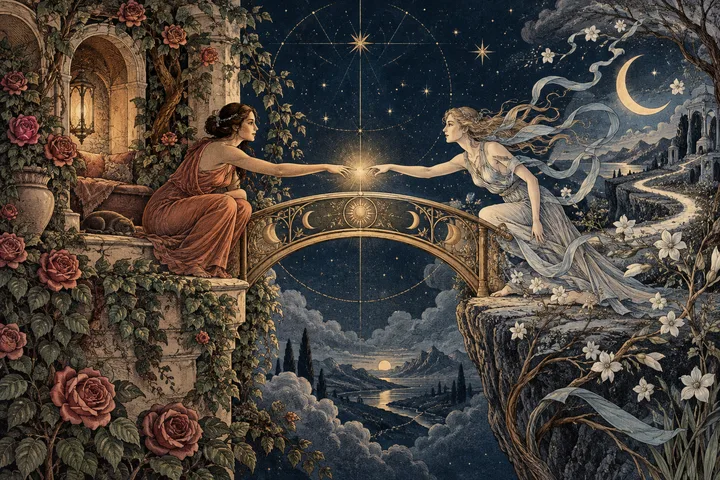
That’s the direct answer. Strong attraction can coexist with different Venus needs because attraction is not a promise that two people will recognize closeness in the same form. A Venus mismatch may even create part of the fascination. But the relationship needs a bridge from fascination to understanding, and that bridge has to be visible in daily behavior.
Use three questions after you compare the chart. What does each person offer without being asked? What does each person need to feel chosen rather than merely desired? What small, repeatable action would make that care easier to recognize? The answers will tell you more than a compatibility label.
If you’re working with known signs but no degrees, stay with the sign and element comparison and treat aspect claims as unconfirmed. If you have degrees, compare selected major aspects with the stated six-degree orb. More placements add layers, but they don’t erase the Venus question.
A supplied-placement Synastry Comparison Report can help you put those layers in order. Enter the Moon, Venus, and Mars signs you know, add degrees when you have them, and use the report to compare attraction, affection, emotional comfort, and desire without collapsing them into one verdict. It won’t decide whether a relationship should continue. It can give you a clearer question to bring to the relationship itself.
The strongest exception is this: sometimes the Venus mismatch is not the real issue. A couple may blame different tastes when the deeper problem is a lack of availability, care, or repair. A chart can describe why the pull feels vivid. It can’t turn inconsistency into devotion. Watch what happens after the explanation.
That is where the opening scene changes. Daniel’s voice note is still playful. Maria’s need for depth is still real. Neither has to surrender the way they love. They do have to stop asking the other person to prove love in a dialect they don’t speak. Name the dialect. Ask for one clear translation. Then see whether the other person answers.
For Maria, the request might be, ‘When we have a serious moment, please ask me one question before you make a joke.’ For Daniel, it might be, ‘When you need space, tell me when you’ll reconnect instead of disappearing.’ These are not personality rewrites. They are small bridges. They let a Venus difference remain a difference without making either person guess what the difference means.
You can make the next step even smaller. Choose one situation that repeats: the end of a date, a delayed text, a disagreement about public affection, or the moment one person wants sex and the other wants reassurance. Describe the moment without chart language. Then add the chart language as a way to understand the pattern. The order matters. Lived experience keeps the interpretation honest.
If both people can name what they need and offer a fair translation, different Venus signs may become a source of range. One person brings steadiness. The other brings movement. One brings privacy. The other brings openness. The relationship has more than one way to feel close. That richness only helps when neither person has to abandon the need that makes closeness meaningful.
If only one person keeps translating, the chart’s difference becomes an unequal burden. Attraction can survive for a while on hope, novelty, or Mars heat. A bond built on mutual affection needs more. It needs two people who can notice the other person’s style, make room for it, and repair the moment when the translation fails.
Sources: Synastry: Love and Relationship Astrology; Venus, Goddess of Love, in Astrology
A little more clarity
Can different Venus signs still have strong attraction?
Yes. Different Venus signs can create fascination because each person brings a distinct style of affection, pleasure, and attachment. A Venus-Venus square or opposition may increase friction while keeping the attraction vivid. Check the Moon and Mars too. Mars may explain the heat, while the Moon shows whether affection feels emotionally welcome. The chart describes the pattern. Daily choices decide how it gets lived.
Which matters more, Venus signs or a Venus-Venus aspect?
Use both, in order. The signs describe each person’s preferred style of closeness. The aspect describes how those styles meet. A close conjunction can show shared habits, while a square or opposition can show attraction with a recurring translation problem. A broad sign mismatch shouldn’t outweigh a close contact to the Moon, Mars, or another personal planet. Rank the whole pattern instead of counting aspects.
What if I know the Venus signs but not the degrees?
You can compare the signs, elements, and modalities, but you shouldn’t claim an exact aspect or orb. Degrees determine how close a conjunction, square, trine, or opposition is. If a degree is missing, mark that layer as unconfirmed. A placement comparison can still explain different preferences for affection, while a fuller synastry reading needs the supplied degrees and a consistent aspect policy.
How do I know whether the Venus mismatch is workable?
Ask whether each person can translate care into a form the other person can receive. Look for repeatable actions, clear conversations, and repair after a missed need. Astrology can show why attraction is strong and why closeness feels different. It can’t replace attention to availability, respect, consent, or follow-through. The strongest sign of workability is not perfect Venus agreement. It’s mutual willingness to learn the other person’s dialect.
Sources & further reading
- Synastry: Love and Relationship Astrology
Supports Venus as a synastry factor for attraction, Venus-Venus aspect meanings, and the distinct roles of Moon and Mars contacts.
- Venus, Goddess of Love, in Astrology
Supports Venus as a significator of values, pleasure, affection, attraction, attachment, and relationship style.
- Love, Relationship Astrology: Venus in Elements
Supports the comparison of Venus through fire, earth, air, and water elements and different expressions of affection.
- Venus Square Venus Meaning, Synastry Chart Aspect
Supports the interpretive point that Venus square Venus can combine attraction with difficulty around relationship style and expectations.
Synastry Comparison Report
Enter known placements for two people. Get an input-by-input comparison, selected aspect calculations and a clear record of what remains uncertain.
Compare our placements